



Too young to have learned what sorrow means,
Attired for spring, she climbs to her high chamber....
The new green of the street-willows is wounding her heart --
Just for a title she sent him to war.
Original Poem
「闺怨」
王昌龄
闺中少妇不知愁,春日凝妆上翠楼。
忽见陌头杨柳色,悔教夫婿觅封侯。
Interpretation
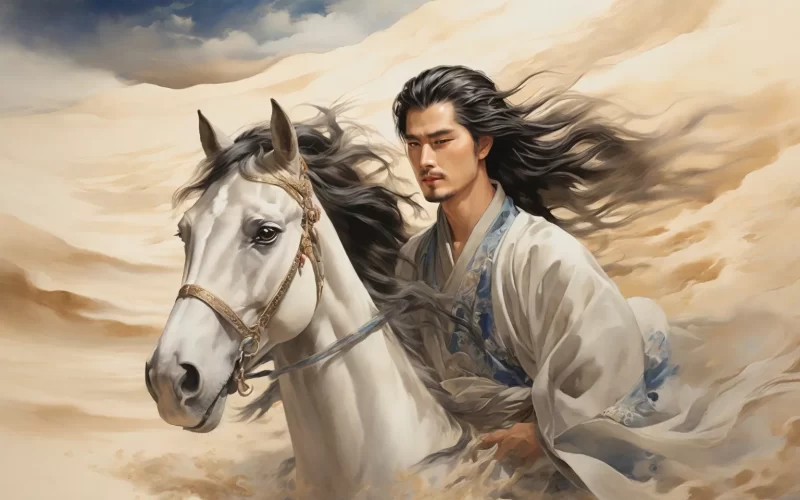
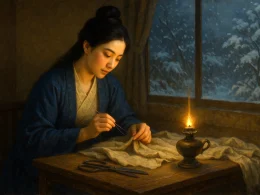
The High Tang was an era that exalted merit and fame. Men sang loudly of "功名只向马上取" (Merit and fame are only won on horseback), rushing to the frontiers to chase the dream of earning a noble title. In their wake, countless women were left behind in empty chambers, their youth withering in long waits, their lives passing in endless longing. This poem is about such a woman. Shortly after her wedding, her husband left for the frontier, to "觅封侯" (seek a marquisate). Another spring arrives. She dresses carefully and ascends the green tower to enjoy the view—this should be the most beautiful time of her youth. Yet, when she sees the lush green of the willows by the roadside, she suddenly realizes: spring has come again, and her husband is not by her side; however fine the spring scene, there is no one to share it with; youth passes quickly, beauty fades easily. In that moment, she regrets—regrets having let her husband pursue that so-called "marquisate."
Wang Changling's own official career was fraught with setbacks and repeated demotions; he knew the pain of separation intimately. When he writes of a lady's lament, is he not, through her voice, expressing his own feelings about his life's journey? The sigh of "悔教夫婿觅封侯" (I regret having urged my lord to seek a marquisate) is also his own reflection on the pursuit of fame. Waiting and longing, regret and reflection—in this moment, ancient and modern sorrows are one.
First Couplet: "闺中少妇不知愁,春日凝妆上翠楼。"
Guī zhōng shàofù bù zhī chóu, chūn rì níng zhuāng shàng cuì lóu.
In her chamber, the young wife knows not what grief is;
In springtime, finely adorned, she ascends the green tower.
The opening uses a seemingly light tone to depict the young wife's carefree state. The three words "不知愁" (knows not what grief is) are the poet's narration and the wife's own self-perception. She has not yet experienced true parting, not yet tasted the torment of longing, so she "knows not what grief is."
"春日凝妆上翠楼"—Spring has come; she adorns herself with care and ascends the green tower to enjoy the view. The phrase "凝妆" (finely adorned) shows her effort—this is not a casual outing, but a deliberate dressing up, as if for a rendezvous. However, on the green tower, there is no one she expects to meet. She merely enjoys the scenery, savors the spring day. This couplet uses "knows not what grief" to show the wife's innocence, and "finely adorned" and "ascends the green tower" to show her anticipation of spring, setting the stage for the emotional turn to follow.
Second Couplet: "忽见陌头杨柳色,悔教夫婿觅封侯。"
Hū jiàn mò tóu yáng liǔ sè, huǐ jiào fūxù mì fēnghóu.
Suddenly she sees the willows' green by the roadside,
Regrets having urged her lord to seek a marquisate.
This couplet is the poem's emotional climax and an immortal famous line. "忽见"—The word "忽" (suddenly) conveys the abruptness of the emotion. A moment ago, she was "finely adorned, ascending the green tower," still enjoying the spring day; suddenly, everything changes.
"陌头杨柳色"—Willows, in classical poetry, are often associated with parting and longing. Ancient people broke willow branches to see off travelers (折柳送别), playing on the similarity in sound between "柳" (willow) and "留" (to stay), expressing a wish to detain the traveler. When the young wife sees the lush green of the roadside willows, she suddenly realizes: spring has come again, and her husband is not here; however fine the spring scene, there is no one to share it with; youth passes quickly, beauty fades easily. The color of the willows is like a mirror, reflecting her loneliness and her regret. "悔教夫婿觅封侯"—In that moment, she regrets. The word "悔" (regret) is the poem's heaviest word. She regrets having urged her husband to pursue merit and fame, regrets not having kept him, regrets trading her youth for that empty "marquisate." This line condenses all emotion into a single word, all reflection into a single sigh.
Holistic Appreciation
Beginning with "knows not what grief" and ending with "regret," this poem accomplishes a dramatic emotional turn in just four lines. The first two lines describe the wife's carefree anticipation; the last two describe her sudden realization and regret. The two words "忽见" (suddenly she sees) are the key to the turn, the starting point of the emotional outburst.
The entire poem is fresh in language, deep in emotion. It uses no ornate diction, no vehement complaint, only the simplest language to capture a woman's emotional shift on a spring day. The anticipation of "finely adorned, she ascends the green tower", the trigger of "suddenly she sees the willows' green", and the sigh of "Regrets having urged her lord…" are all so genuine, so moving. Compared to other, more direct poems of a lady's lament, this one is more restrained, more subtle, and thus more resonant. The poet does not have the wife verbalize her pain; he only shows us her action (finely adorning, ascending the tower), her sight (the willows' green by the roadside), and her regret (regretting her urging). It is precisely this "not stating it outright" that makes the pain deeper, the regret more enduring.
Artistic Merits
- Using Joy to Write Sorrow, Startling Turn: The first two lines depict the wife's joy and anticipation; the last two abruptly turn to her regret and lament. Using a joyful scene to express sorrow redoubles the sorrow.
- Emotion within Scene, Emotion Born from Scene: "陌头杨柳色" (the willows' green by the roadside) is both scene and emotion; a visual trigger and an internal upheaval. One scene stirs a thousand sorrows; image and emotion fuse perfectly.
- Fresh Language, Profound Meaning: The poem's language is simple and natural, yet contains profound reflection on merit, fame, youth, and life—shallow in words, deep in meaning.
- Concise Ending, Lingering Resonance: The seven characters "悔教夫婿觅封侯" condense all emotion into one point, leaving endless aftertaste.
Insights
This poem first reveals to us the paradox of fame and happiness. In that era, it was considered right and proper for a man to pursue a "marquisate"; it was glory, it was success. But in this poem, we see that behind this "success" lies a wife's loneliness, the wasting of youth, the separation of a family. It tells us: Do not be dazzled by external glory; consider what true happiness is. Fame can bring glory, but also loneliness; success can bring fulfillment, but also regret.
The word "忽" (suddenly) in "忽见陌头杨柳色" also prompts us to contemplate the suddenness and uncontrollability of emotion. The wife was enjoying the spring day, was carefree, but suddenly, everything changed. The color of the willows touched off her longing, and her regret. This "sudden" emotion is the most genuine, and the most moving. It reveals: Emotions are unpredictable and uncontrollable. We think we "know not what grief is," but one day, in one moment, grief may suddenly strike, leaving us unprepared. Accepting this "suddenness" is accepting the truth of human nature.
The word "悔" (regret) in "悔教夫婿觅封侯" further leads us to reflect on the eternal relationship between choice and regret. The wife's urging her husband to "seek a marquisate" was a choice; her regret now is the consequence. Every choice may bring regret; every life path may lead to remorse. It reveals: Life is an eternal cycle of choice and regret. We cannot avoid regret, but we can choose how to face it. Do we drown in it, or move forward carrying it? That depends on us.
The figure of the young wife, "finely adorned" in spring, "ascending the green tower," is especially poignant. She dresses carefully, ascends the tower, originally to enjoy the spring, but unexpectedly stirs her longing. In that moment, her beauty, her loneliness, her regret all coalesce in the "willows' green by the roadside." This instant of suddenly discovering absence within beauty is the most universal and profound emotional experience in the human world. It teaches us: Cherish the present, cherish those before you. Because those we think will always be there may one day be gone; the time we think we will always have may one day pass.
Poem translator
Kiang Kanghu
About the poet
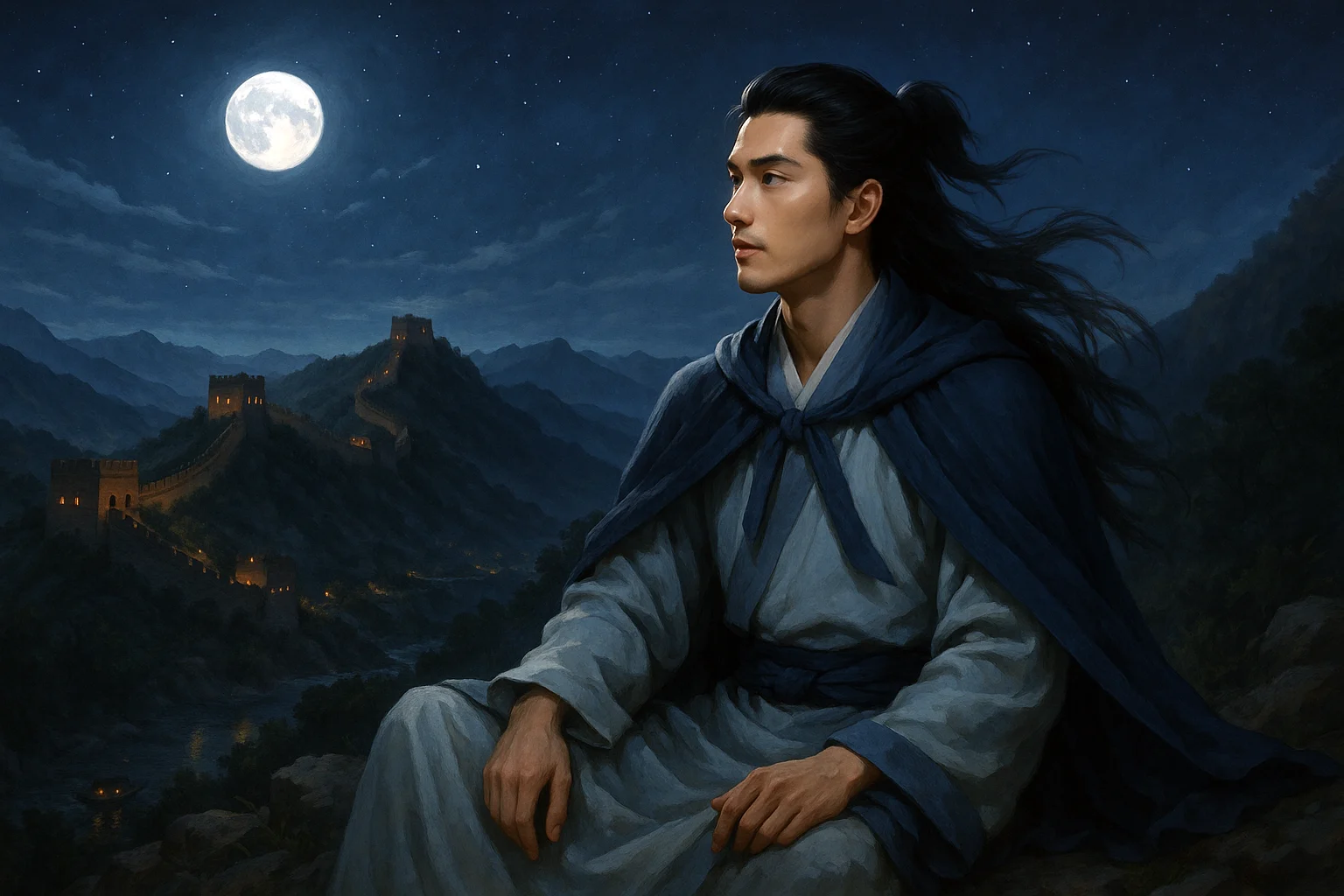
Wang Changling (王昌龄), circa A.D. 690 - 756, was a native of Xi'an, Shaanxi Province. Wang Changling's poems were mostly about the Border Places, love affairs and farewells, and he was well known during his lifetime. His seven poems are equal to those of Li Bai, and he is known as the “Master of seven lines”.