


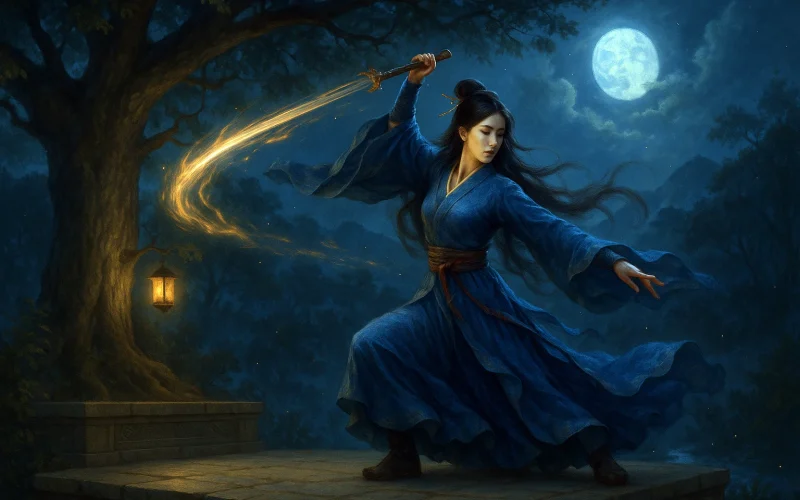
There lived years ago the beautiful Gongsun,
Who, dancing with her dagger, drew from all four quarters
An audience like mountains lost among themselves.
Heaven and earth moved back and forth, following her motions,
Which were bright as when the Archer shot the nine suns down the sky
And rapid as angels before the wings of dragons.
She began like a thunderbolt, venting its anger,
And ended like the shining calm of rivers and the sea...

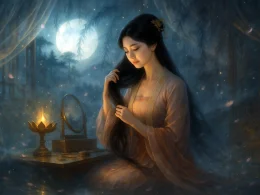
But vanished are those red lips and those pearly sleeves;
And none but this one pupil bears the perfume of her fame,
This beauty from Lingying, at the Town of the White God,
Dancing still and singing in the old blithe way.
And while we reply to each other's questions,
We sigh together, saddened by changes that have come.

There were eight thousand ladies in the late Emperor's court,
But none could dance the dagger-dance like Lady Gongsun.
...Fifty years have passed, like the turning of a palm;
Wind and dust, filling the world, obscure the Imperial House.
Instead of the Pear-Garden Players, who have blown by like a mist,
There are one or two girl-musicians now-trying to charm the cold Sun.
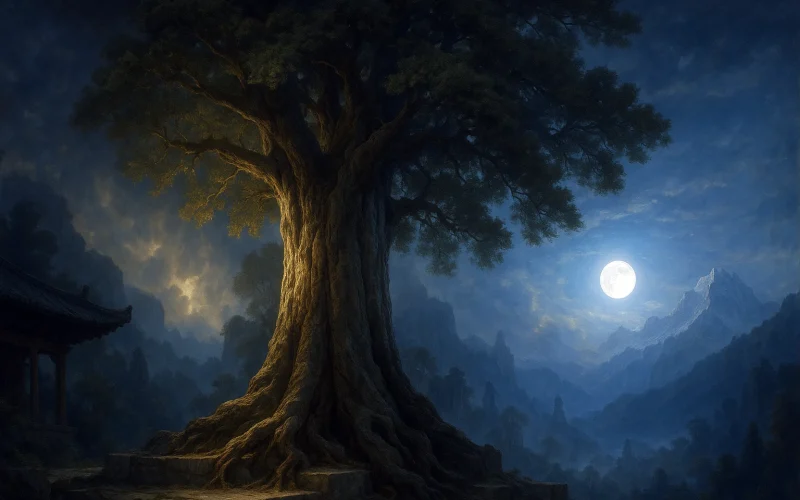
There are man-size trees by the Emperor's Golden Tomb
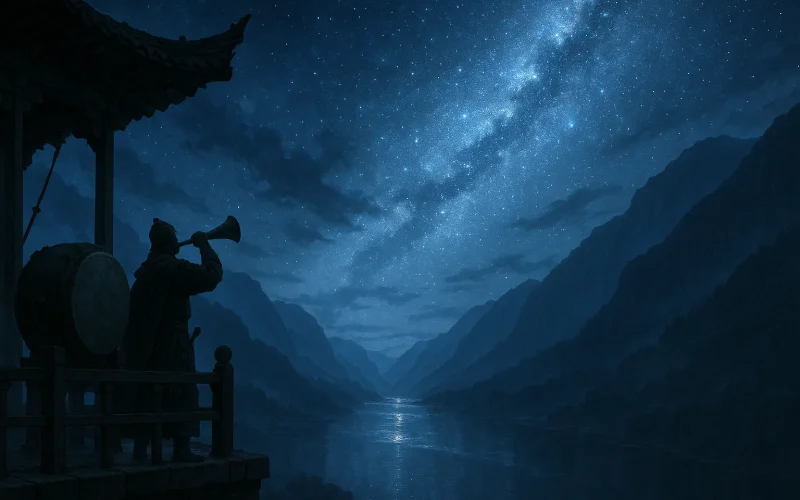
I seem to hear dead grasses rattling on the cliffs of Qutang.

...The song is done, the slow string and quick pipe have ceased.
At the height of joy, sorrow comes with the eastern moon rising.
And I, a poor old man, not knowing where to go,
Must harden my feet on the lone hills, toward sickness and despair.
Original Poem
「观公孙大娘弟子舞剑器行」
杜甫
昔有佳人公孙氏,一舞剑器动四方。
观者如山色沮丧,天地为之久低昂。
霍如羿射九日落,矫如群帝骖龙翔,
来如雷霆收震怒,罢如江海凝清光。
绛唇珠袖两寂寞,晚有弟子传芬芳。
临颍美人在白帝,妙舞此曲神扬扬。
与余问答既有以,感时抚事增惋伤。
先帝侍女八千人,公孙剑器初第一。
五十年间似反掌,风尘澒洞昏王室。
梨园子弟散如烟,女乐余姿映寒日。
金粟堆前木已拱,瞿塘石城草萧瑟。
玳筵急管曲复终,乐极哀来月东出。
老夫不知其所往?足茧荒山转愁疾。
Interpretation
This poem was composed in the tenth lunar month of 767 CE, during Du Fu’s exile in Kuizhou. As detailed in its substantial preface, the poet attended a gathering at the home of Yuan Chi, Assistant Governor of Kuizhou, where he witnessed Lady Li the Twelfth of Linying perform the Sword Dance. Upon learning she was a disciple of the legendary Gongsun Daniang, he was overcome with profound emotion. Gongsun Daniang was the most celebrated dancer of the Kaiyuan era, whose Sword Dance of Huntuo embodied the majestic artistic spirit of the High Tang. Now, fifty years later, that glorious age had passed. The shifting fortunes of these two dancers, master and disciple, seemed to mirror in miniature the entire trajectory of the Tang dynasty's rise and fall. Thus, taking a dance as its central thread, the poem connects personal memory, artistic lineage, and the transformation of a nation’s destiny. It stands as a masterful work in which Du Fu uses his poetic craft to preserve a portrait of his age.
First Couplet: 昔有佳人公孙氏,一舞剑器动四方。
Xī yǒu jiārén Gōngsūn shì, yī wǔ jiànqì dòng sìfāng.
In days gone by lived a lady of renown, of the Gongsun line; / A single performance of her Sword Dance could stir the world.
The opening is declarative and historical, establishing a tone of remembrance. “In days gone by” immediately creates temporal distance. “Stir the world” summarizes the vast reach of her influence, setting the stage for the vivid description that follows. The language is dignified and respectful.
Second Couplet: 观者如山色沮丧,天地为之久低昂。
Guānzhě rú shān sè jǔsàng, tiāndì wèi zhī jiǔ dī áng.
The crowd of onlookers stood mountain-high, their faces stricken with awe; / Heaven and earth swayed endlessly, rocked by her movements.
Through dramatic hyperbole, the couplet conveys the dance’s transcendent power from two perspectives: the human audience and the cosmos itself. “Stood mountain-high” depicts the immense, packed crowd; “faces stricken with awe” reveals its deep psychological impact. “Heaven and earth swayed” elevates the dance to a force that moves the universe, capturing its ultimate artistic potency.
Third Couplet: 霍如羿射九日落,矫如群帝骖龙翔。
Huò rú Yì shè jiǔ rì luò, jiǎo rú qún dì cān lóng xiáng.
A flash—like Yi the Archer shooting down nine suns; / A leap—like hosts of gods driving dragon-steeds across the sky.
Fourth Couplet: 来如雷霆收震怒,罢如江海凝清光。
Lái rú léitíng shōu zhènnù, bà rú jiāng hǎi níng qīng guāng.
Her entrance—like thunder gathering its pent-up rage; / Her finish—like rivers and seas calming into a sheet of light.
These two couplets employ a series of magnificent, precise similes to crystallize the dance’s dynamism and spirit. The first focuses on explosive power and soaring grace. The second captures its arresting commencement and its serene, resonant conclusion. Together, they transform fleeting, breathtaking motion into permanent, luminous poetry.
Fifth Couplet: 绛唇珠袖两寂寞,晚有弟子传芬芳。
Jiàng chún zhū xiù liǎng jìmò, wǎn yǒu dìzǐ chuán fēnfāng.
Crimson lips and beaded sleeves—both long sunk in silence; / Yet late there came a disciple to pass the fragrance of this art along.
The focus shifts from past glory to present absence. “Crimson lips and beaded sleeves” metonymically represent the dancer and her art; “long sunk in silence” laments their passing. “Yet late there came a disciple” introduces a note of continuity, bringing Lady Li into the narrative and bridging to the poet’s contemporary reflections.
Sixth Couplet: 临颍美人在白帝,妙舞此曲神扬扬。
Lín Yǐng měirén zài Báidì, miào wǔ cǐ qǔ shén yángyáng.
Now the beauty from Linying dwells in White Emperor City; / With wondrous skill she dances this piece, her spirit bright and high.
It depicts the present scene. “Dwells in White Emperor City” indicates her current, likely reduced, circumstances far from the old capital. “Spirit bright and high” praises the undimmed vitality of her performance, creating a poignant contrast between the disciple’s exile and the master’s former glory.
Seventh Couplet: 与余问答既有以,感时抚事增惋伤。
Yǔ yú wèndá jì yǒuyǐ, gǎn shí fǔ shì zēng wǎnshāng.
We conversed, and thus I learned the story of her training; / Moved by these times, recalling the past, my sorrow and regret increased.
This marks the transition from observation to meditation. Confirming the dancer’s lineage (“learned the story”) triggers the poet’s historical consciousness. The phrase “moved by these times, recalling the past” acts as the poem’s emotional pivot, connecting the personal moment to the grand narrative of dynastic change.
Eighth Couplet: 先帝侍女八千人,公孙剑器初第一。
Xiāndì shìnǚ bā qiān rén, Gōngsūn jiànqì chū dìyī.
The late Emperor’s court held eight thousand singing and dancing girls; / Yet from the first, Gongsun’s Sword Dance was ranked the very best.
The hyperbolic “eight thousand” evokes the staggering scale and luxury of the Kaiyuan court. “Ranked the very best” reaffirms Gongsun Daniang’s unparalleled status within that zenith, heightening the sense of what has been lost.
Ninth Couplet: 五十年间似反掌,风尘澒洞昏王室。
Wǔshí nián jiān sì fǎnzhǎng, fēngchén hòngdòng hūn wángshì.
Fifty years have passed, swift as the turning of a hand; / Whirlwinds of dust loom vast and dark, have dimmed the royal house.
Time collapses dramatically. “Swift as the turning of a hand” conveys shocking brevity and impermanence. “Whirlwinds of dust” is a powerful metaphor for the catastrophic An Lushan Rebellion and its aftermath, directly linking the passage of time to the darkening of the dynasty’s fortune.
Tenth Couplet: 梨园子弟散如烟,女乐余姿映寒日。
Líyuán zǐdì sàn rú yān, nǚyuè yú zī yìng hán rì.
Disciples of the Pear Garden have scattered now like smoke; / This lady artist’s lingering grace is mirrored in the cold sun’s light.
The desolation is made specific. “Scattered now like smoke” portrays the complete dissolution of that once-celebrated artistic community. “Lingering grace… in the cold sun’s light” paints a stark, beautiful, and melancholy image of the sole remaining artist performing in a diminished age.
Eleventh Couplet: 金粟堆前木已拱,瞿塘石城草萧瑟。
Jīnsù duī qián mù yǐ gǒng, Qútáng shíchéng cǎo xiāosè.
Before the Gold-Mound Tomb, the trees have grown thick, arms can span their girth; / Here by Qutang Gorge in Stone Wall Town, the grasses rustle, bleak and sere.
Two spatial images are juxtaposed to deepen the historical contrast. “Gold-Mound Tomb” (Emperor Xuanzong’s burial mound) represents the past; “trees have grown thick” signifies the long passage of time. “Stone Wall Town” is the poet’s present place of exile; “grasses rustle, bleak” is the actual desolate scenery, reflecting his inner chill. Together, they speak of the enduring silence after glory.
Twelfth Couplet: 玳筵急管曲复终,乐极哀来月东出。
Dài yán jí guǎn qǔ fù zhōng, lè jí āi lái yuè dōng chū.
The fine feast, the urgent pipes—the melody too finds its end; / Joy reaches its limit, sorrow arrives, the moon rises in the east.
The scene returns to the banquet, reaching a philosophical plane. “The melody too finds its end” symbolizes the inevitable conclusion of all revelry. “Joy reaches its limit, sorrow arrives” states a universal emotional and historical law. “The moon rises in the east” presents the serene, eternal counterpoint of nature to transient human affairs.
Final Couplet: 老夫不知其所往?足茧荒山转愁疾。
Lǎofū bù zhī qí suǒ wǎng? Zú jiǎn huāngshān zhuǎn chóu jí.
This old man—what road is left for him to take? / With calloused feet on barren hills I turn, my sorrow sharpening, my pace quickening.
The poem concludes by focusing on the poet’s own existential plight. “What road is left…” expresses spatial, spiritual, and historical disorientation. “Calloused feet on barren hills” is the physical mark of prolonged exile. “My sorrow sharpening, my pace quickening” captures a restless, deepening anguish. The vast historical sorrow is thus distilled into the personal, unresolved suffering of the individual.
Holistic Appreciation
This poem represents the apex of Du Fu’s ability to fuse personal experience, aesthetic perception, and historical vision. Its structure is cinematic: it opens with a flashback to Gongsun Daniang’s legendary performance, cuts to the present performance of her disciple, interweaves historical montages triggered by the poet’s memory, and finally closes on a lingering shot of the poet himself, lost and wandering. This masterful intercutting of past and present creates immense emotional and intellectual resonance.
The poem’s profound achievement lies in “using a single dance to contemplate an entire era, and a single artist to reflect the fate of a whole generation of devoted individuals.” The trajectories of Gongsun Daniang and Lady Li are not merely about artistic transmission; they become a potent symbol of the High Tang civilization’s radiant rise and tragic decline. Within this framework, Du Fu channels not only his reverence for a great artist but also his profound elegy for the era that produced such brilliance, and his own piercing sorrow as a survivor adrift in its aftermath.
Artistic Merits
- Transcendent Imagery, Capturing Motion in Verse
The four similes describing the dance are among the most celebrated in Chinese poetry for depicting performance. With breathtaking imagination, they translate dynamic, visual spectacle into static, yet vibrantly alive, poetic language, achieving a kind of artistic alchemy. - Grand Architecture Built on Temporal Contrast
The entire poem is structured upon the framework of “then” and “now.” Layers of contrast—between the master’s fame and the disciple’s obscurity, the eight thousand court performers and their dispersal, the imperial tomb and the frontier town—construct a expansive narrative space that embodies the theme of dynastic transformation. - Symbiosis of Preface and Poem
The prose preface and the poetic text form an indispensable whole. The preface provides narrative context and documentary details; the poem concentrates lyrical and imaginative power. Their combination enhances the work’s emotional depth and historical authenticity. - Profound Resonance and Rhythmic Cadence
The emotional cadence of the poem is masterfully controlled, moving from awe to lament to philosophical resignation, embodying Du Fu’s signature “deeply somber and rhythmically complex” style. The concluding couplet, with its heavy, unresolved cadence, leaves a lasting echo of sorrow.
Insights
This poem demonstrates that great art is inextricably linked to the spirit of its age. The power of Gongsun Daniang’s dance derived from the majestic vitality of the Kaiyuan zenith; the poignant beauty of Lady Li’s “lingering grace” reflects the fading light of that civilization. Du Fu, the poet-witness, captures this fundamental symbiosis.
Its legacy offers an insight that transcends mere nostalgia for a lost art: The flame of a civilization is carried not only in its canonical texts but also in the fleeting gestures of a dancer; historical memory is preserved not only by official chronicles but also through the lament of poets and the embodied knowledge of artists. Lost in the “barren hills,” Du Fu nonetheless erected, through this poem, an eternal monument to a vanished epoch and its supreme artistic moment. It is a powerful testament to the idea that against the erosion of time, only profound understanding, sincere witness, and faithful remembrance can preserve and re-ignite the radiant “light” of the past.
Poem translator
Kiang Kanghu
About the poet
Du Fu (杜甫), 712 - 770 AD, was a great poet of the Tang Dynasty, known as the "Sage of Poetry". Born into a declining bureaucratic family, Du Fu had a rough life, and his turbulent and dislocated life made him keenly aware of the plight of the masses. Therefore, his poems were always closely related to the current affairs, reflecting the social life of that era in a more comprehensive way, with profound thoughts and a broad realm. In his poetic art, he was able to combine many styles, forming a unique style of "profound and thick", and becoming a great realist poet in the history of China.