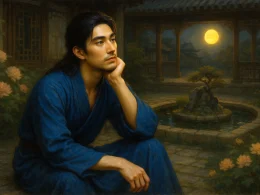




In the eighth moon the weed cold grows,
The autumn waves surge with white crest.
The mast shivers as north wind blows;
Why should my guest go to the west?

The rain no longer drizzles on hilltop;
Out of the door rises the evening tide.
At night along the beach my friend should stop.
Hear lonely wild goose cry by riverside!
Original Poem
「送刘昱」
李颀
八月寒苇花,秋江浪头白。
北风吹五两,谁是浔阳客。
鸬鹚山头微雨晴,扬州郭里暮潮生。
行人夜宿金陵渚,试听沙边有雁声。
Interpretation
Li Qi's official career was largely unsuccessful. In his early years, he lived in seclusion in Yingyang. Later, despite passing the jinshi examination, he only attained a minor post like the County Captain of Xinxiang, ultimately resigning to return to a reclusive life. This experience meant that his farewell poems often transcended mere sorrow at parting, instead blending in deep reflection on the vicissitudes of life. Little is known about Liu Yu's life, but he was evidently a friend of Li Qi. This poem describes an autumn farewell, likely set in the Yangzhou region. "Xunyang-bound traveler" in the poem indicates Liu Yu's destination towards Jiangxi, while "Jinling's isle" specifies where his friend will moor at night. With a sparse and understated brush, the poet sketches a picture of farewell on an autumn river: cold reeds, white waves, north wind, fine rain, evening tide, and the cry of wild geese—these layered images evoke the mood of parting with subtlety and depth.
Place names appear three times in the poem: Xunyang, Yangzhou, Jinling. This is not mere name-dropping but hints at the friend's long journey along the river. The concluding line, "Just listen on the sandy shore: you’ll hear wild geese's cry," shows both consideration for the friend's lonely journey and a projection of the poet's own state of mind—that geese cry is both a sound of nature and an echo in the traveler's heart.
First Couplet: "八月寒苇花,秋江浪头白。"
Bā yuè hán wěi huā, qiū jiāng làng tou bái.
In the eighth month, the reed flowers shiver in the cold;
On autumn’s river, crest on crest, the breakers froth white.
The opening uses two images to outline the autumn river scene. "Cold reed flowers" (寒苇花, hán wěi huā) specifies the season and implies desolation—reed flowers themselves are not cold, but the eighth-month autumn wind brings chill. "On autumn’s river... breakers froth white" depicts the river view, with churning, frothing waves, a real scene that also metaphorically suggests the turbulent feelings of parting. Both lines are pure description, yet the sorrow of farewell is already present within them.
Second Couplet: "北风吹五两,谁是浔阳客。"
Běi fēng chuī wǔ liǎng, shuí shì Xúnyáng kè.
The north wind blows the five-ounce windsack:
Who is the one bound for Xunyang?
"The five-ounce" (五两, wǔ liǎng) was an ancient wind gauge, made of five ounces of feathers or fine cloth tied to the top of a mast to observe wind direction and force. The north wind blowing it signals a favorable time for sailing. The poet, gazing at the boats on the river, wonders: among all these vessels, which one carries my friend, bound for distant Xunyang? This question transforms the melancholy of parting into specific concern, more moving than a plain "I bid you farewell."
Third Couplet: "鸬鹚山头微雨晴,扬州郭里暮潮生。"
Lúcí shān tóu wēi yǔ qíng, Yángzhōu guō lǐ mù cháo shēng.
On Cormorant Hill, the drizzling rain has just cleared;
Outside Yangzhou’s walls, the evening tide now swells.
This couplet shifts perspective from near to far, from the river surface to its banks. Cormorant Hill is near Yangzhou; clearing after a fine rain describes the weather at parting; the evening tide rising outside Yangzhou's walls describes the river scene at dusk. The two lines form a neat parallel: one writes of the hill, the other the water; one of clearing skies, the other of the rising tide; one of the place of farewell, the other of the direction the friend will take. The rising tide means it is time to sail; the coming of dusk means the traveler will depart.
Fourth Couplet: "行人夜宿金陵渚,试听沙边有雁声。"
Xíngrén yè sù Jīnlíng zhǔ, shì tīng shā biān yǒu yàn shēng.
Tonight, on Jinling’s isle, the traveler will moor;
Just listen on the sandy shore: you’ll hear wild geese's cry.
The final couplet projects from the present scene to the time after parting. "The traveler will moor on Jinling’s isle" indicates the friend's first stop at Jinling (present-day Nanjing). The poet advises: there, on that sandy isle, in the quiet of night, listen for the cry of wild geese from the shore. The lonely cry of wild geese is often associated with the sorrows of travel. The poet does not speak of his own longing, but only tells his friend to listen for the geese—that sound becomes the poet's message and the vessel for their parting feelings.
Holistic Appreciation
This is a farewell poem that uses scene to convey emotion, achieving subtlety and depth. In eight lines, not a single word directly speaks of "sorrow" or "grief," yet every line lands within the mood of parting.
The first four lines describe what is seen and thought while bidding farewell by the river. Images of cold reeds, white froth, north wind, and the windsack layer upon each other, outlining the desolation and restlessness of the autumn river. The question, "Who is the one bound for Xunyang?" vividly captures the poet standing by the river, watching the boats depart. The last four lines shift perspective, describing the weather and tide after parting, finally settling on a piece of advice: when you reach Jinling, listen for the geese.
This technique dissolves the deep feeling of farewell into the scenery, letting nature become the vessel for emotion. The poet does not say, "I will miss you," but only, "You listen for the geese"; he does not say, "Take care on your journey," but only, "The evening tide now swells." Everything lies within the scene, yet everything transcends it.
Place names appear four times: Xunyang, Cormorant Hill, Yangzhou, Jinling. This is not clutter but traces a clear river route. The friend will depart from Yangzhou, travel upriver, pass Jinling, and head for Xunyang. The poet watches this route, silently counting each mooring place in his heart. This geographical specificity makes the abstract sorrow of parting palpable and tangible.
Artistic Merits
- Conveying Emotion Through Scene, Subtle and Lasting: The poem never directly mentions parting sorrow, yet through images like cold reeds, white waves, north wind, and geese cries, it thoroughly evokes the mood of farewell.
- A Pivotal Question with Lingering Resonance: The question, "Who is the one bound for Xunyang?" brings to life the poet's stance by the river, watching the boats, and gives the sorrow of parting a specific focus.
- Shifts in Time and Space, Clear Layers: Moving from the immediate farewell to the imagined time after, from the riverside to the hill, from Yangzhou to Jinling, the constant shifts in time and space deepen the emotion.
- Simple, Unadorned Language, Profound Atmosphere: The language throughout is plain and unembellished, yet it creates a vast, clear, cold, and far-reaching atmosphere that perfectly fits the theme of an autumn river farewell.
- A Unique, Meaningful Conclusion: Ending with "Just listen on the sandy shore: you’ll hear wild geese's cry" entrusts the sorrow of parting to a natural sound. It is both advice for the friend and a revelation of the poet's own state of mind.
Insights
This poem, through the scene of an autumn river farewell, expresses the particular subtlety and deep affection characteristic of Chinese partings. It shows us another way of expressing emotion. The poet does not say, "I cannot bear to part with you," but only, "北风吹五两"; he does not say, "I will think of you," but only, "试听沙边有雁声". This subtle form of expression is more thought-provoking and closer to traditional Chinese emotional expression than straightforward declaration. It reminds us: truly deep feelings often do not need loud proclamations; they are hidden within seemingly ordinary scenes and words of advice.
The question in the poem, "谁是浔阳客" captures the particular state of mind of the one seeing off a traveler. Gazing at the boats coming and going on the river, knowing perfectly well which one carries his friend, he still asks, "Who is...?" This almost soliloquizing question is the natural overflow of an unwillingness to part. It makes us understand: the pain of parting lies not in the moment of saying goodbye, but in the long standing and gazing that follows.
On a deeper level, the poem also makes us contemplate the relationship between "distance" and "concern." The friend will travel downriver, passing place after place. The poet lists these names as if measuring with his heart the journey his friend will take. This concern is not a bond but a warm companionship—even if he cannot travel alongside, he will walk every stretch of the road in his imagination.
Poem translator
Xu Yuanchong (许渊冲)
About the poet
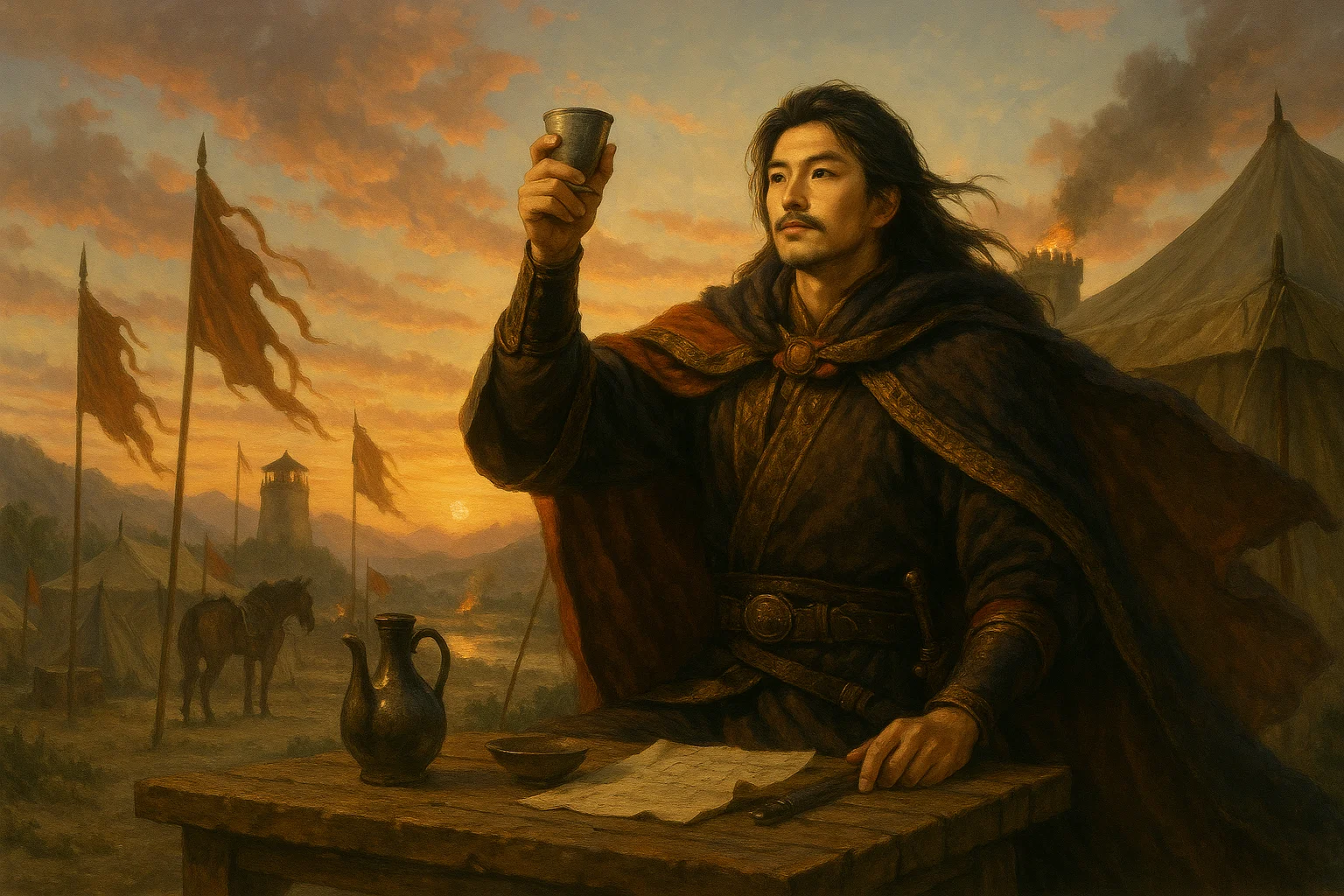
Li Qi (李颀 c. 690 – c. 751), whose ancestral home was in Zhao County, Hebei Province, was a renowned frontier fortress poet of the High Tang period. He became a jinshi (presented scholar) in the 23rd year of the Kaiyuan era (735 AD) and served as the Sheriff of Xinxiang before retiring from official life to live in seclusion. His poetry is best known for its frontier themes, and he excelled particularly in seven-character ancient verse and character portrayal. He had a gift for blending boldness with delicate emotion, and together with Gao Shi and Cen Shen, he collectively shaped the grandeur of High Tang frontier poetry.