


China's Emperor, craving beauty that might shake an empire,
Was on the throne for many years, searching, never finding,
Till a little child of the Yang clan, hardly even grown,
Bred in an inner chamber, with no one knowing her,
But with graces granted by heaven and not to be concealed,
At last one day was chosen for the imperial household.
If she but turned her head and smiled, there were cast a hundred spells,
And the powder and paint of the Six Palaces faded into nothing.
...It was early spring. They bathed her in the FlowerPure Pool,
Which warmed and smoothed the creamy-tinted crystal of her skin,
And, because of her languor, a maid was lifting her
When first the Emperor noticed her and chose her for his bride.
The cloud of her hair, petal of her cheek, gold ripples of her crown when she moved,
Were sheltered on spring evenings by warm hibiscus curtains;
But nights of spring were short and the sun arose too soon,
And the Emperor, from that time forth, forsook his early hearings
And lavished all his time on her with feasts and revelry,
His mistress of the spring, his despot of the night.
There were other ladies in his court, three thousand of rare beauty,
But his favours to three thousand were concentered in one body.
By the time she was dressed in her Golden Chamber, it would be almost evening;
And when tables were cleared in the Tower of Jade, she would loiter, slow with wine.
Her sisters and her brothers all were given titles;
And, because she so illumined and glorified her clan,
She brought to every father, every mother through the empire,
Happiness when a girl was born rather than a boy.

...High rose Li Palace, entering blue clouds,
And far and wide the breezes carried magical notes
Of soft song and slow dance, of string and bamboo music.
The Emperor's eyes could never gaze on her enough-
Till war-drums, booming from Yuyang, shocked the whole earth
And broke the tunes of The Rainbow Skirt and the Feathered Coat.

The Forbidden City, the nine-tiered palace, loomed in the dust
From thousands of horses and chariots headed southwest.
The imperial flag opened the way, now moving and now pausing- -
But thirty miles from the capital, beyond the western gate,
The men of the army stopped, not one of them would stir
Till under their horses' hoofs they might trample those moth- eyebrows....
Flowery hairpins fell to the ground, no one picked them up,
And a green and white jade hair-tassel and a yellowgold hair- bird.
The Emperor could not save her, he could only cover his face.
And later when he turned to look, the place of blood and tears
Was hidden in a yellow dust blown by a cold wind.

...At the cleft of the Dagger-Tower Trail they crisscrossed through a cloud-line
Under Omei Mountain. The last few came.
Flags and banners lost their colour in the fading sunlight...
But as waters of Shu are always green and its mountains always blue,
So changeless was His Majesty's love and deeper than the days.
He stared at the desolate moon from his temporary palace.
He heard bell-notes in the evening rain, cutting at his breast.

And when heaven and earth resumed their round and the dragon car faced home,
The Emperor clung to the spot and would not turn away
From the soil along the Mawei slope, under which was buried
That memory, that anguish. Where was her jade-white face?
Ruler and lords, when eyes would meet, wept upon their coats
As they rode, with loose rein, slowly eastward, back to the capital.
...The pools, the gardens, the palace, all were just as before,
The Lake Taiye hibiscus, the Weiyang Palace willows;
But a petal was like her face and a willow-leaf her eyebrow --
And what could he do but cry whenever he looked at them?

...Peach-trees and plum-trees blossomed, in the winds of spring;
Lakka-foliage fell to the ground, after autumn rains;
The Western and Southern Palaces were littered with late grasses,
And the steps were mounded with red leaves that no one swept away.
Her Pear-Garden Players became white-haired
And the eunuchs thin-eyebrowed in her Court of PepperTrees;
Over the throne flew fire-flies, while he brooded in the twilight.
He would lengthen the lamp-wick to its end and still could never sleep.
Bell and drum would slowly toll the dragging nighthours
And the River of Stars grow sharp in the sky, just before dawn,
And the porcelain mandarin-ducks on the roof grow thick with morning frost
And his covers of kingfisher-blue feel lonelier and colder
With the distance between life and death year after year;
And yet no beloved spirit ever visited his dreams.

...At Lingqiong lived a Taoist priest who was a guest of heaven,
Able to summon spirits by his concentrated mind.
And people were so moved by the Emperor's constant brooding
That they besought the Taoist priest to see if he could find her.
He opened his way in space and clove the ether like lightning,
Up to heaven, under the earth, looking everywhere.
Above, he searched the Green Void, below, the Yellow Spring;
But he failed, in either place, to find the one he looked for.

And then he heard accounts of an enchanted isle at sea,
A part of the intangible and incorporeal world,
With pavilions and fine towers in the five-coloured air,
And of exquisite immortals moving to and fro,
And of one among them-whom they called The Ever True-
With a face of snow and flowers resembling hers he sought.

So he went to the West Hall's gate of gold and knocked at the jasper door
And asked a girl, called Morsel-of-Jade, to tell The Doubly- Perfect.
And the lady, at news of an envoy from the Emperor of China,
Was startled out of dreams in her nine-flowered, canopy.
She pushed aside her pillow, dressed, shook away sleep,
And opened the pearly shade and then the silver screen.
Her cloudy hair-dress hung on one side because of her great haste,
And her flower-cap was loose when she came along the terrace,
While a light wind filled her cloak and fluttered with her motion
As though she danced The Rainbow Skirt and the Feathered Coat.
And the tear-drops drifting down her sad white face
Were like a rain in spring on the blossom of the pear.

But love glowed deep within her eyes when she bade him thank her liege,
Whose form and voice had been strange to her ever since their parting --
Since happiness had ended at the Court of the Bright Sun,
And moons and dawns had become long in Fairy-Mountain Palace.
But when she turned her face and looked down toward the earth
And tried to see the capital, there were only fog and dust.
So she took out, with emotion, the pledges he had given
And, through his envoy, sent him back a shell box and gold hairpin,
But kept one branch of the hairpin and one side of the box,
Breaking the gold of the hairpin, breaking the shell of the box;
"Our souls belong together," she said, " like this gold and this shell --
Somewhere, sometime, on earth or in heaven, we shall surely meet."
And she sent him, by his messenger, a sentence reminding him
Of vows which had been known only to their two hearts:
"On the seventh day of the Seventh-month, in the Palace of Long Life,
We told each other secretly in the quiet midnight world
That we wished to fly in heaven, two birds with the wings of one,
And to grow together on the earth, two branches of one tree."

Earth endures, heaven endures; some time both shall end,
While this unending sorrow goes on and on for ever.
Original Poem
「长恨歌」
白居易
汉皇重色思倾国,御宇多年求不得。
杨家有女初长成,养在深闺人未识。
天生丽质难自弃,一朝选在君王侧。
回眸一笑百媚生,六宫粉黛无颜色。
春寒赐浴华清池,温泉水滑洗凝脂。
侍儿扶起娇无力,始是新承恩泽时。
云鬓花颜金步摇,芙蓉帐暖度春宵。
春宵苦短日高起,从此君王不早朝。
承欢侍宴无闲暇,春从春游夜专夜。
后宫佳丽三千人,三千宠爱在一身。
金屋妆成娇侍夜,玉楼宴罢醉和春。
姊妹弟兄皆列土,可怜光彩生门户。
遂令天下父母心,不重生男重生女。
骊宫高处入青云,仙乐风飘处处闻。
缓歌谩舞凝丝竹,尽日君王看不足。
渔阳鼙鼓动地来,惊破霓裳羽衣曲。
九重城阙烟尘生,千乘万骑西南行。
翠华摇摇行复止,西出都门百余里。
六军不发无奈何,宛转蛾眉马前死。
花钿委地无人收,翠翘金雀玉搔头。
君王掩面救不得,回看血泪相和流。
黄埃散漫风萧索,云栈萦纡登剑阁。
峨嵋山下少人行,旌旗无光日色薄。
蜀江水碧蜀山青,圣主朝朝暮暮情。
行宫见月伤心色,夜雨闻铃肠断声。
天旋地转回龙驭,到此踌躇不能去。
马嵬坡下泥土中,不见玉颜空死处。
君臣相顾尽沾衣,东望都门信马归。
归来池苑皆依旧,太液芙蓉未央柳。
芙蓉如面柳如眉,对此如何不泪垂。
春风桃李花开日,秋雨梧桐叶落时。
西宫南内多秋草,落叶满阶红不扫。
梨园弟子白发新,椒房阿监青娥老。
夕殿萤飞思悄然,孤灯挑尽未成眠。
迟迟钟鼓初长夜,耿耿星河欲曙天。
鸳鸯瓦冷霜华重,翡翠衾寒谁与共。
悠悠生死别经年,魂魄不曾来入梦。
临邛道士鸿都客,能以精诚致魂魄。
为感君王辗转思,遂教方士殷勤觅。
排空驭气奔如电,升天入地求之遍。
上穷碧落下黄泉,两处茫茫皆不见。
忽闻海上有仙山,山在虚无缥渺间。
楼阁玲珑五云起,其中绰约多仙子。
中有一人字太真,雪肤花貌参差是。
金阙西厢叩玉扃,转教小玉报双成。
闻道汉家天子使,九华帐里梦魂惊。
揽衣推枕起徘徊,珠箔银屏迤逦开。
云鬓半偏新睡觉,花冠不整下堂来。
风吹仙袂飘飘举,犹似霓裳羽衣舞。
玉容寂寞泪阑干,梨花一枝春带雨。
含情凝睇谢君王,一别音容两渺茫。
昭阳殿里恩爱绝,蓬莱宫中日月长。
回头下望人寰处,不见长安见尘雾。
惟将旧物表深情,钿合金钗寄将去。
钗留一股合一扇,钗擘黄金合分钿。
但教心似金钿坚,天上人间会相见。
临别殷勤重寄词,词中有誓两心知。
七月七日长生殿,夜半无人私语时。
在天愿作比翼鸟,在地愿为连理枝。
天长地久有时尽,此恨绵绵无绝期。
Interpretation
"Song of Unending Sorrow" was composed in 806 AD during the Yuanhe reign of Emperor Xianzong, when Bai Juyi served as the County Lieutenant of Zhouzhi. That winter, while visiting the Xianyousi Temple with his friends Chen Hong and Wang Zhifu, the conversation turned to the story of Emperor Xuanzong and Consort Yang. Deeply moved, and at Wang Zhifu's suggestion, Bai Juyi composed this long narrative poem. Chen Hong later wrote "The Tale of the Song of Everlasting Sorrow" in prose to accompany it. Although set against the An Lushan Rebellion, the poem transcends mere political allegory to focus on the love tragedy itself. It blends historical fact, legend, and artistic imagination to create a timeless epic of love. Written when Bai Juyi was 35, at the height of his creative powers, this poem marks a new peak in his artistry and pioneered the use of the long Gexing form for narrating an emperor's romance.
Section One
汉皇重色思倾国,御宇多年求不得。
Hàn huáng zhòng sè sī qīng guó, yù yǔ duō nián qiú bù dé.
杨家有女初长成,养在深闺人未识。
Yáng jiā yǒu nǚ chū zhǎng chéng, yǎng zài shēn guī rén wèi shí.
天生丽质难自弃,一朝选在君王侧。
Tiān shēng lì zhì nán zì qì, yī zhāo xuǎn zài jūn wáng cè.
回眸一笑百媚生,六宫粉黛无颜色。
Huí móu yī xiào bǎi mèi shēng, liù gōng fěn dài wú yán sè.
春寒赐浴华清池,温泉水滑洗凝脂。
Chūn hán cì yù Huáqīng chí, wēnquán shuǐ huá xǐ níng zhī.
侍儿扶起娇无力,始是新承恩泽时。
Shì ér fú qǐ jiāo wú lì, shǐ shì xīn chéng ēn zé shí.
云鬓花颜金步摇,芙蓉帐暖度春宵。
Yún bìn huā yán jīn bù yáo, fúróng zhàng nuǎn dù chūn xiāo.
春宵苦短日高起,从此君王不早朝。
Chūn xiāo kǔ duǎn rì gāo qǐ, cóng cǐ jūn wáng bù zǎo cháo.
承欢侍宴无闲暇,春从春游夜专夜。
Chéng huān shì yàn wú xián xiá, chūn cóng chūn yóu yè zhuān yè.
后宫佳丽三千人,三千宠爱在一身。
Hòugōng jiālì sān qiān rén, sān qiān chǒng'ài zài yī shēn.
金屋妆成娇侍夜,玉楼宴罢醉和春。
Jīn wū zhuāng chéng jiāo shì yè, yù lóu yàn bà zuì hé chūn.
姊妹弟兄皆列土,可怜光彩生门户。
Zǐmèi dìxiōng jiē liè tǔ, kělián guāngcǎi shēng ménhù.
遂令天下父母心,不重生男重生女。
Suì lìng tiānxià fùmǔ xīn, bù chóng shēng nán chóng shēng nǚ.
The Han emperor, craving a beauty to topple kingdoms, sought for years throughout his realm, in vain. / A daughter of the Yang house, just ripened to womanhood, / Reared in the inner chambers, unseen by the world. / With heaven-sent grace and looks too hard to hide, / One day she was summoned to the lord’s own side. / A glance from her eyes, a hundred charms; / The powdered and painted ladies of the six palaces were all colorless. / In chilly spring, she bathed in the Huaqing pools, / The warm spring waters washed her creamy, smooth skin. / Her maids helped her rise, so delicate, strengthless— / Thus began her reception of the royal favor. / Cloudlike hair, flowerlike face, a golden hairpin swaying, / She passed warm spring nights beneath lotus-blossom curtains. / Spring nights, alas, too short! The sun rose high; / From then on, the lord no longer held morning court. / In the joy of her company, at feasts she served, no leisure; / Spring outings with her, nights for her alone. / In the rear palace were three thousand ladies fair, / But on this one, three thousand favors were bestowed. / In a golden chamber, made up, she waited through the night, / In the jade tower, the feast done, spring merged with her wine. / Sisters and brothers all were given fiefs; / How splendid, the glory showered on the family gate! / Which made parents throughout the land feel in their hearts / That to honor a girl was better than to honor a boy.
This section opens the magnificent prelude to the Li-Yang romance with an epic touch. "Craving a beauty to topple kingdoms" sets the tone for the entire poem, hinting at the latent conflict between politics and passion. The turn from "unseen by the world" to "summoned to the lord’s own side" reveals the caprice of fate and chance. The poet uses richly layered brushstrokes to depict Consort Yang’s unparalleled beauty: "A glance from her eyes, a hundred charms" captures her expression; "The warm spring waters washed her creamy, smooth skin" describes her complexion; "Cloudlike hair, flowerlike face, a golden hairpin swaying" paints her adornment. These layers build one of the most captivating feminine images in Chinese literary history. Yet lines like "Spring nights, alas, too short! The sun rose high" and "the lord no longer held morning court" embed subtle critique within the luxuriance, foreshadowing the tragedy. The concluding depiction of the social phenomenon—"to honor a girl was better than to honor a boy"—highlights, from a different angle, the extreme glory bestowed upon the Yang family.
Section Two
骊宫高处入青云,仙乐风飘处处闻。
Lí gōng gāo chù rù qīng yún, xiān yuè fēng piāo chù chù wén.
缓歌谩舞凝丝竹,尽日君王看不足。
Huǎn gē màn wǔ níng sī zhú, jìn rì jūn wáng kàn bù zú.
渔阳鼙鼓动地来,惊破霓裳羽衣曲。
Yúyáng pígǔ dòng dì lái, jīng pò Nícháng Yǔyī qǔ.
九重城阙烟尘生,千乘万骑西南行。
Jiǔ chóng chéng què yān chén shēng, qiān shèng wàn qí xīnán xíng.
翠华摇摇行复止,西出都门百余里。
Cuìhuá yáoyáo xíng fù zhǐ, xī chū dū mén bǎi yú lǐ.
六军不发无奈何,宛转蛾眉马前死。
Liù jūn bù fā wú nài hé, wǎnzhuǎn éméi mǎ qián sǐ.
花钿委地无人收,翠翘金雀玉搔头。
Huā diàn wěi dì wú rén shōu, cuì qiào jīn què yù sāo tóu.
君王掩面救不得,回看血泪相和流。
Jūn wáng yǎn miàn jiù bù dé, huí kàn xuè lèi xiāng hé liú.
黄埃散漫风萧索,云栈萦纡登剑阁。
Huáng āi sǎnmàn fēng xiāo suǒ, yún zhàn yíng yū dēng Jiàn gé.
峨嵋山下少人行,旌旗无光日色薄。
Éméi shān xià shǎo rén xíng, jīngqí wú guāng rì sè báo.
蜀江水碧蜀山青,圣主朝朝暮暮情。
Shǔ jiāng shuǐ bì Shǔ shān qīng, shèng zhǔ zhāo zhāo mù mù qíng.
行宫见月伤心色,夜雨闻铃肠断声。
Xínggōng jiàn yuè shāng xīn sè, yè yǔ wén líng cháng duàn shēng.
天旋地转回龙驭,到此踌躇不能去。
Tiān xuán dì zhuǎn huí lóng yù, dào cǐ chóuchú bù néng qù.
马嵬坡下泥土中,不见玉颜空死处。
Mǎwéi pō xià ní tǔ zhōng, bú jiàn yù yán kōng sǐ chǔ.
The Li Palace’s heights pierced the blue clouds; / Immortal music wafted on the wind, heard everywhere. / Slow songs, languid dances, mingled with strings and flutes; / All day the lord watched, never satisfied. / But war drums from Yuyang shook the earth, / Shattering the Rainbow and Feather Garments melody. / From the ninefold gates and walls, smoke and dust arose; / A thousand chariots, ten thousand horsemen headed southwest. / The kingfisher banners faltered, moving, stopping again; / A hundred *li* west of the city gates they halted. / The six armies would not march—what could be done? / Before the horses, the moth-eyebrowed beauty, fair and pleading, died. / Flowery hairpins dropped to the ground, no one picked them up: / Kingfisher plumes, golden sparrows, jade hair-ornaments. / The lord covered his face; he could not save her. / Looking back, he saw blood and tears mingled, flowing together. / Yellow dust swirling, the wind soughing bleak; / Winding cloud-laced paths, they climbed Sword Pass. / Below Mount Emei, few travelers passed; / Banners and pennons colorless, the sunlight pale. / Shu’s river waters so blue, Shu’s mountains so green; / Morning and evening, the sage lord’s feelings dwelled. / Seeing the moon from the traveling palace—a heart-breaking sight; / Hearing bells in the night rain—a gut-wrenching sound. / Heaven turned, earth shifted; the dragon carriage returned. / Reaching this spot, he lingered, could not depart. / Beneath the soil at Mawei Slope, / He saw no jade-like face, only the place of death.
This section marks the dramatic turn and emotional climax of the poem. The poet, with the seven words "war drums from Yuyang shook the earth," shatters the previous dream of luxury like a thunderclap, hurling personal love into the torrent of history. The juxtaposition in "Shattering the Rainbow and Feather Garments melody" is powerfully tense—artistic beauty collides with the cruelty of war. The depiction of the Mawei mutiny is particularly shocking: "The six armies would not march" portrays the ruthlessness of political reality; "the moth-eyebrowed beauty… died" reveals the fragility of individual life; "Flowery hairpins dropped to the ground" symbolizes, through the scattering of exquisite ornaments, the utter collapse of splendor. The lines "The lord covered his face; he could not save her. / Looking back, he saw blood and tears mingled" engrave the emperor’s powerlessness and grief with remarkable depth. The descriptions of the journey into Shu—"Yellow dust swirling," "the wind soughing bleak," "Banners and pennons colorless"—are all tinged with thick sorrow, while the bright scenery of "Shu’s river waters so blue, Shu’s mountains so green" starkly contrasts with the emperor’s "Morning and evening… feelings." Finally, returning to Mawei, the word "空" (empty/vain) in "He saw no jade-like face, only the place of death" expresses the eternal loss of things being changed and people gone.
Section Three
归来池苑皆依旧,太液芙蓉未央柳。
Guī lái chí yuàn jiē yī jiù, Tàiyè fúróng Wèiyāng liǔ.
芙蓉如面柳如眉,对此如何不泪垂。
Fúróng rú miàn liǔ rú méi, duì cǐ rúhé bù lèi chuí.
春风桃李花开日,秋雨梧桐叶落时。
Chūnfēng táolǐ huā kāi rì, qiūyǔ wútóng yè luò shí.
西宫南内多秋草,落叶满阶红不扫。
Xī gōng nán nèi duō qiū cǎo, luòyè mǎn jiē hóng bù sǎo.
梨园弟子白发新,椒房阿监青娥老。
Líyuán dìzǐ bái fà xīn, jiāo fáng ā jiān qīng é lǎo.
夕殿萤飞思悄然,孤灯挑尽未成眠。
Xī diàn yíng fēi sī qiǎorán, gū dēng tiāo jìn wèi chéng mián.
迟迟钟鼓初长夜,耿耿星河欲曙天。
Chíchí zhōnggǔ chū cháng yè, gěnggěng xīnghé yù shǔ tiān.
鸳鸯瓦冷霜华重,翡翠衾寒谁与共。
Yuānyāng wǎ lěng shuāng huá zhòng, fěicuì qīn hán shéi yǔ gòng.
悠悠生死别经年,魂魄不曾来入梦。
Yōuyōu shēngsǐ bié jīng nián, húnpò bù céng lái rù mèng.
Returning, the pools and gardens all were as before: / Taiye’s lotus, Weiyang’s willows. / Lotus like her face, willows like her brows— / Facing this, how could he not shed tears? / Spring winds, peach and plum blooming; / Autumn rains, wutong leaves falling. / The Western Palace, Southern Courts choked with autumn grass; / Red leaves heaped on the steps, unswept. / The Pear Garden musicians’ hair newly streaked with white; / Pepper Chamber eunuchs, the maids of youth, grown old. / Fireflies flit in the evening halls, thoughts forlorn; / The lone lamp’s wick trimmed to ash, sleep still not won. / Slow, slow, the bells and drums in the deepening night; / Bright, bright, the Starry River—dawn about to break. / Mandarin-duck tiles cold, thick with frost; / The kingfisher quilt chilled—who is there to share it? / Long, long, the parting of life and death, year upon year; / Her spirit never once came to him in a dream.
Explication: This section delves into the lonely twilight scenery of the emperor’s life after his return to the capital, a concrete unfolding of the "everlasting sorrow." The poet employs the technique of "using joyful scenery to convey sorrow": the palace gardens remain the same, the Taiye lotus and Weiyang willows as ever, but the association—"Lotus like her face, willows like her brows"—transforms the beautiful scene entirely into grief. The cyclical passage of seasons in "Spring winds, peach and plum blooming; / Autumn rains, wutong leaves falling" implies the endlessness of suffering. The desolation of the palace ("autumn grass," "leaves heaped…unswept") and the aging of former companions ("musicians’ hair newly streaked with white," "maids…grown old") together construct a bleak picture of the passage of time and the complete change of all things. The detailed portrayal of sleepless nights—"The lone lamp’s wick trimmed to ash," "Slow, slow, the bells and drums," "Bright, bright, the Starry River"—embodies longing as a tangible, physiological experience. The line "Her spirit never once came to him in a dream" holds a sliver of desperate expectation amidst the hopelessness, laying the groundwork for the celestial search in the following section.
Section Four
临邛道士鸿都客,能以精诚致魂魄。
Línqióng dàoshì hóng dōu kè, néng yǐ jīngchéng zhì húnpò.
为感君王辗转思,遂教方士殷勤觅。
Wèi gǎn jūnwáng zhǎnzhuǎn sī, suì jiào fāngshì yīnqín mì.
排空驭气奔如电,升天入地求之遍。
Pái kōng yù qì bēn rú diàn, shēng tiān rù dì qiú zhī biàn.
上穷碧落下黄泉,两处茫茫皆不见。
Shàng qióng bìluò xià huángquán, liǎng chǔ mángmáng jiē bú jiàn.
忽闻海上有仙山,山在虚无缥渺间。
Hū wén hǎi shàng yǒu xiān shān, shān zài xūwú piāomiǎo jiān.
楼阁玲珑五云起,其中绰约多仙子。
Lóugé línglóng wǔ yún qǐ, qízhōng chuòyuē duō xiānzǐ.
中有一人字太真,雪肤花貌参差是。
Zhōng yǒu yī rén zì Tàizhēn, xuě fū huā mào cēncī shì.
金阙西厢叩玉扃,转教小玉报双成。
Jīn què xī xiāng kòu yù jiōng, zhuǎn jiào Xiǎo Yù bào Shuāng Chéng.
闻道汉家天子使,九华帐里梦魂惊。
Wén dào Hàn jiā tiānzǐ shǐ, jiǔhuá zhàng lǐ mèng hún jīng.
揽衣推枕起徘徊,珠箔银屏迤逦开。
Lǎn yī tuī zhěn qǐ páihuái, zhū bó yín píng yǐlǐ kāi.
云鬓半偏新睡觉,花冠不整下堂来。
Yún bìn bàn piān xīn shuì jiào, huā guān bù zhěng xià táng lái.
风吹仙袂飘飘举,犹似霓裳羽衣舞。
Fēng chuī xiān mèi piāopiāo jǔ, yóu sì Nícháng Yǔyī wǔ.
玉容寂寞泪阑干,梨花一枝春带雨。
Yù róng jìmò lèi lángān, líhuā yī zhī chūn dài yǔ.
含情凝睇谢君王,一别音容两渺茫。
Hán qíng níng dì xiè jūnwáng, yī bié yīn róng liǎng miǎománg.
昭阳殿里恩爱绝,蓬莱宫中日月长。
Zhāoyáng diàn lǐ ēn'ài jué, Pénglái gōng zhōng rì yuè cháng.
回头下望人寰处,不见长安见尘雾。
Huí tóu xià wàng rénhuán chǔ, bú jiàn Cháng'ān jiàn chén wù.
惟将旧物表深情,钿合金钗寄将去。
Wéi jiāng jiù wù biǎo shēn qíng, diàn hé jīn chāi jì jiāng qù.
钗留一股合一扇,钗擘黄金合分钿。
Chāi liú yī gǔ hé yī shàn, chāi bāi huángjīn hé fēn diàn.
但教心似金钿坚,天上人间会相见。
Dàn jiào xīn sì jīn diàn jiān, tiānshàng rénjiān huì xiāng jiàn.
临别殷勤重寄词,词中有誓两心知。
Lín bié yīnqín chóng jì cí, cí zhōng yǒu shì liǎng xīn zhī.
七月七日长生殿,夜半无人私语时。
Qī yuè qī rì Chángshēng diàn, yèbàn wú rén sīyǔ shí.
在天愿作比翼鸟,在地愿为连理枝。
Zài tiān yuàn zuò bǐyì niǎo, zài dì yuàn zuò liánlǐ zhī.
天长地久有时尽,此恨绵绵无绝期。
Tiān cháng dì jiǔ yǒu shí jǐn, cǐ hèn miánmián wú jué qī.
A Daoist from Linqiong, a guest of the capital, / Could summon spirits with utmost sincerity. / Moved by the lord’s restless, turning thoughts, / He bade the magician diligently seek. / Parting the void, riding the ether, swift as lightning, / He searched high and low, through heaven and earth. / He probed the highest heavens, descended to the Yellow Springs; / Both were vast and empty, she was nowhere seen. / Then suddenly he heard of a magic mountain on the sea, / A mountain in the vague and misty realm of nothingness. / Exquisite towers rose amid five-colored clouds, / And there were many graceful sylphs within. / One among them was named Taizhen, / With snow-white skin, flower-like face—it seemed to be her. / He knocked at the jade door of the golden palace’s west wing; / Word was passed by Xiaoyu to tell Shuangcheng. / Hearing a messenger had come from the Han Son of Heaven, / Startled from dream within her nine-flower curtains. / She pushed the pillow aside, drew on her robes, arose, paced; / Pearl blinds, silver screens opened one by one. / Her cloudlike hair half-sideways, just awakened from sleep; / Her flowery headdress not adjusted, she descended the hall. / The wind blew her immortal sleeves, billowing, lifting— / Still like the Rainbow and Feather Garments Dance. / Her jade face, forlorn, streaked with tears, / A single spray of pear blossom in the spring rain. / Gazing intently, her feelings deep, she thanked the lord: / "Since we parted, voice and face have both grown dim. / Love in the Zhaoyang Palace is cut off; / Days and months in the Penglai Palace are long. / Turning my head, I gaze down on the mortal world, / I cannot see Chang’an, only mist and dust. / I’ll use these old keepsakes to show my deep feeling: / The inlaid box and golden hairpin I send with you. / One half of the hairpin, one leaf of the box I keep; / The hairpin’s gold is snapped, the box’s shell is parted. / But let our hearts be firm as this gold, this shell; / In heaven or on earth, we shall meet again." / At parting, earnestly she entrusted more words, / Words in which was a vow two hearts once knew: / "On the seventh day of the seventh month, in the Palace of Long Life, / At midnight, with no one near, we whispered secretly: / ‘In heaven we wish to be birds flying wing to wing; / On earth, to be trees with branches intertwined.’ / Heaven endures, earth lasts—sometime both shall end; / But this sorrow is without end, forever and ever."
This section shifts into fantastical and magnificent romantic imagination, representing the emotional sublimation and philosophical distillation of the entire poem. The Daoist’s search—"He probed the highest heavens, descended to the Yellow Springs"—symbolizes the extreme persistence of longing. The turn of "Then suddenly he heard of a magic mountain on the sea" extends the real-world tragedy into a transcendent realm. The description of the immortal realm and the sylph Taizhen (Consort Yang) is supremely beautiful and ethereal. "The wind blew her immortal sleeves, billowing, lifting— / Still like the Rainbow and Feather Garments Dance" cleverly connects past and present lives; "A single spray of pear blossom in the spring rain" has become the most famous line in all of Chinese poetry for depicting tears. The sending of the inlaid box and hairpin as tokens represents the proof of emotion transcending life and death. The reappearance of the vow—"On the seventh day of the seventh month, in the Palace of Long Life"—solidifies a moment of secret whispers into eternal memory. The concluding couplet, "Heaven endures, earth lasts—sometime both shall end; / But this sorrow is without end, forever and ever," uses the finitude of cosmic time and space to set in relief the infinity of human emotion, elevating personal joy and sorrow into an eternal philosophical proposition, completing the final leap from "historical narrative" to "love myth."
Holistic Appreciation
This poem represents the pinnacle of Bai Juyi’s long narrative works. Its greatness lies in orchestrating a perfect symphony of historical framing, romantic legend, and profound lyricism. Structured around the sequence of "meeting and favor—catastrophe and death—lonely remembrance—transcendent search," the narrative moves from the splendor of the mortal world to the ethereal realm of immortals, achieving a sublime aesthetic transformation of tragedy. The poet does not simply narrate history but uses the fate of Emperor Xuanzong and Consort Yang as a vehicle to explore the conflict between individual emotion and political destiny, the fragility of earthly glory, and the possibility of spiritual transcendence. The final line, "this sorrow is without end, forever and ever," elevates a specific love story into a universal lament on the impermanence of life and the persistence of longing, granting the work timeless philosophical and artistic value.
Artistic Merits
- Perfect Fusion of Narrative and Lyricism: Using a complete story as its skeleton, the poem is infused with intense emotion. Plot progression and lyrical expression are seamlessly blended, achieving both the grandeur of epic and the depth of lyric poetry.
- Masterful Duality of Realism and Romance: The first two-thirds of the poem are grounded in historical fact, employing a realistic style; the final third gives free rein to imagination, introducing a Daoist immortal realm. This interplay of reality and fantasy expands the poem’s aesthetic dimension and philosophical depth.
- Union of Precise Detail and Expansive Vision: The poem excels at capturing momentary close-ups ("a glance from her eyes, a hundred charms," "a single spray of pear blossom in the spring rain") while also skillfully portraying vast scenes ("a thousand chariots, ten thousand horsemen," "He probed the highest heavens, descended to the Yellow Springs"), demonstrating masterful control of both micro and macro perspectives.
- Layered Musicality of Language: The lines vary in length and flow with natural rhythm. The use of parallel couplets, intricate metaphors, and vivid imagery creates a multi-sensory aesthetic experience, appealing to sight, sound, and emotion.
- Intentional Construction of an Imagistic System: Core images like the Rainbow and Feather Garments dance, the golden hairpin and inlaid box, and the "wing-to-wing birds" and "intertwined branches" run throughout the poem, becoming key symbols carrying emotional and thematic weight.
Insights
This work transcends a simple narrative of imperial love. It reveals the eternal paradox that the pinnacle of beauty often borders the abyss of destruction. The Li-Yang romance, at its height, overturned norms ("the lord no longer held morning court," "to honor a girl was better than to honor a boy"), and ultimately met a tragic end in the storm of politics. This reminds us that any pure emotion detached from reality, no matter how dazzling, may collapse under the weight of history.
However, the poem’s true greatness lies in its aesthetic sublimation of tragedy. Bai Juyi does not stop at political allegory. Through the myth of the immortal realm, he allows love to attain a symbolic immortality beyond destruction. This embodies the unique wisdom in Chinese culture of "transforming sorrow into beauty"—converting the imperfections of reality into the eternity of art. The "sorrow" in "this sorrow is without end" has long surpassed mere regret, evolving into a profound acceptance and aesthetic contemplation of life’s inherent incompleteness.
Ultimately, the poem becomes a multi-faceted mirror: it reflects the conflict between power and emotion, the insignificance of the individual in the torrent of history, and, most importantly, how humanity, through artistic creation, can refine fleeting pain into enduring beauty. It teaches us that true "everlasting sorrow" is not an obsession with loss, but rather, after recognizing that all things must pass, choosing to gaze upon imperfection with a poetic vision, and in that gaze, attaining spiritual transcendence.
Poem translator
Kiang Kanghu
About the Poet
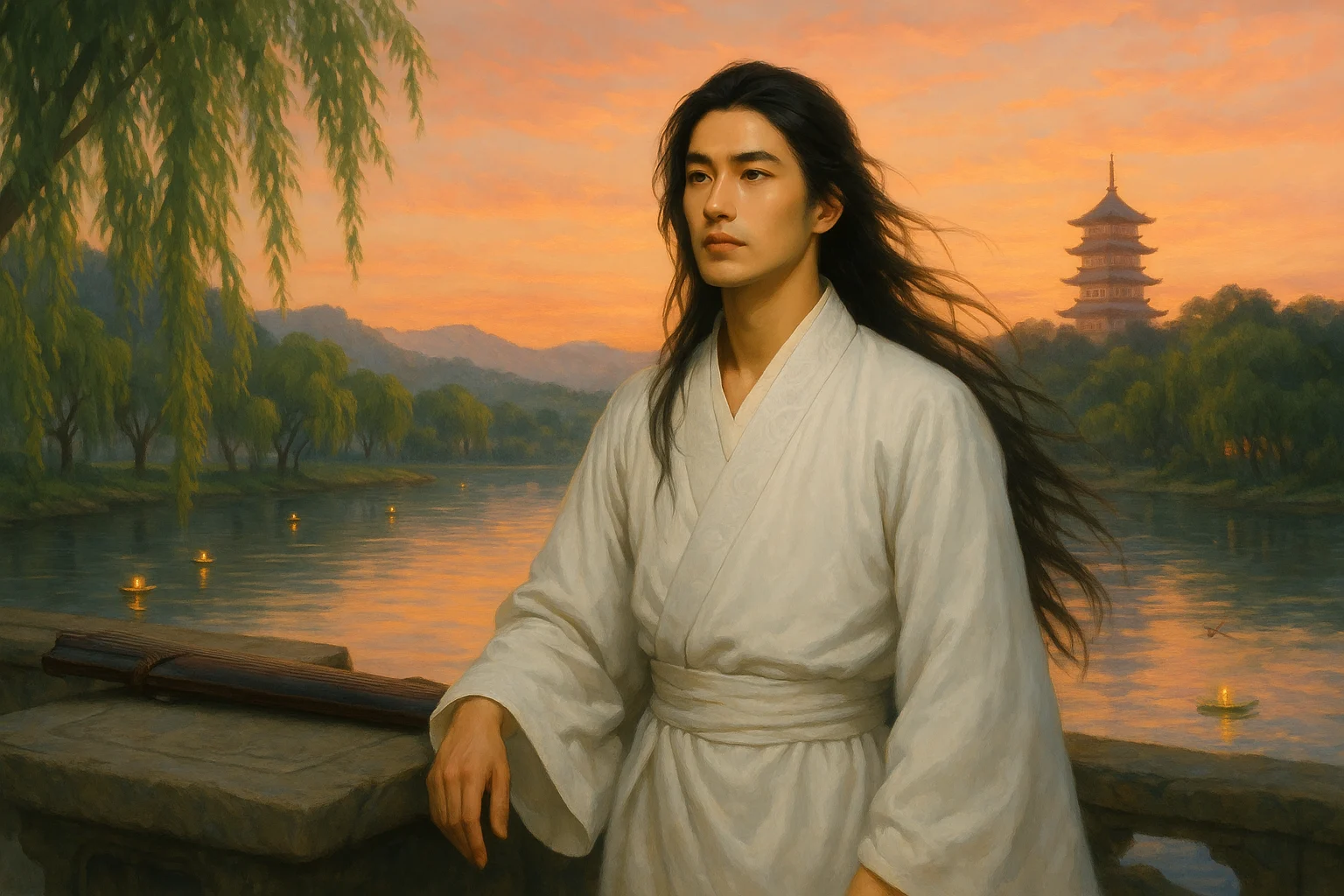
Bai Juyi (白居易), 772 - 846 AD, was originally from Taiyuan, then moved to Weinan in Shaanxi. Bai Juyi was the most prolific poet of the Tang Dynasty, with poems in the categories of satirical oracles, idleness, sentimentality, and miscellaneous rhythms, and the most influential poet after Li Bai Du Fu.