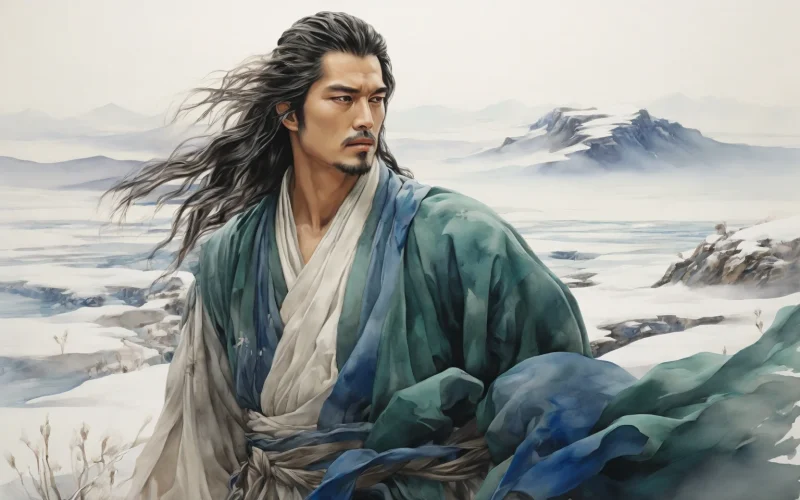



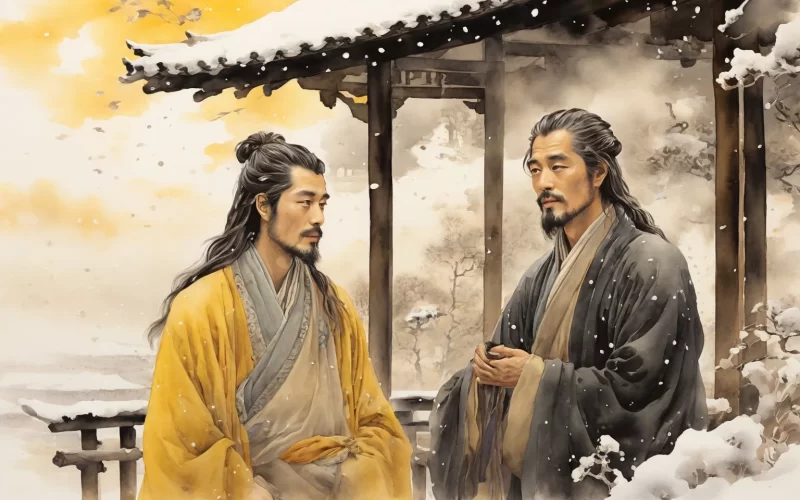
Yellow clouds spread for miles and miles have veiled the day;
The north wind blows down snow and wild geese fly away.
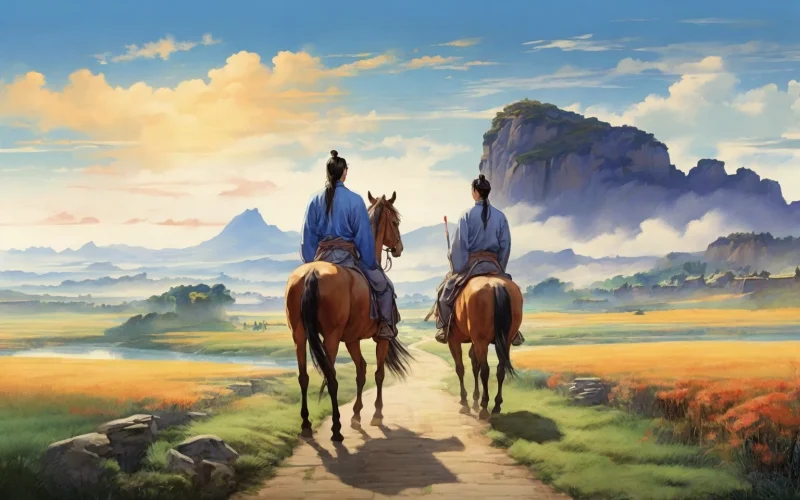
Fear not you've no admirers as you go along.
There is no connoisseur on earth but loves your song.
Original Poem
「别董大二首 · 其一」
高适
千里黄云白日曛,北风吹雁雪纷纷。
莫愁前路无知己,天下谁人不识君。
Interpretation
This poem was composed by the high Tang poet Gao Shi. Gao Shi came from a poor family in his early years and experienced a difficult official career. He wandered extensively between the regions of Liang and Song, living a drifting life among fishermen and woodcutters, deeply acquainted with the hardships of travel, and only obtained an official post when he was nearly fifty. Dong Da refers to Dong Tinglan, a renowned zither master celebrated throughout the land during the reign of Emperor Xuanzong of Tang, famous for his exceptional skill in playing the seven-stringed qin. However, Dong Da's life was also fraught with difficulties; despite his supreme artistry, he often found himself a stranger in distant lands due to the vicissitudes of life. At this time, Gao Shi and Dong Da met in the region between Liang and Song. Two souls adrift in the world, one whose poetic fame was yet to be established, stranded in the dust of hardship, and the other, though peerless in his musical art, drifting across the four seas, were briefly reunited on this winter day with yellow clouds obscuring the sun and heavy snow falling thick and fast, only to part again soon. Had they been ordinary literati, they might have drowned their sorrows in wine and poured out their woes to each other. Yet, in this farewell poem, Gao Shi forges a different path—he does not indulge in the usual sorrows of parting. Instead, with a magnanimous and broad-minded spirit, he offers consolation to his friend. The fourteen characters, "莫愁前路无知己,天下谁人不识君," stem not only from a deep knowledge of Dong Da's famed artistry but also embody the distinctive spiritual outlook of High Tang poets: even in adversity, they still believed that true talent would ultimately be seen by the world, maintaining an uplifting and forward-looking posture towards life.
It is worth noting that Gao Shi himself was at a low point in his own life at this time, yet he could set aside his personal disappointments and wholeheartedly bolster his friend's confidence. This magnanimity of "wishing to establish oneself, one helps others to establish themselves," this character that can still give light to others even in the midst of hardship, is the deeper reason why this poem transcends its time and moves countless readers. Even after a thousand years, reading it still fills the chest with heroic spirit and stirs the blood.
First Couplet: "千里黄云白日曛,北风吹雁雪纷纷。"
Qiān lǐ huáng yún bái rì xūn, běi fēng chuī yàn xuě fēn fēn.
A thousand leagues of yellow clouds dim the pale sun;
The north wind blows the wild geese, the snow falls thick and fast.
The opening lines, with a brushstroke as powerful as a rafter, sketch a vast and desolate winter scene. "千里黄云" (a thousand leagues of yellow clouds) describes the vastness of heaven and earth and the thickness of the clouds; "白日曛" (dim the pale sun) depicts the sunlight obscured by the yellow clouds, casting the world into gloom. The next line, "北风吹雁雪纷纷" (The north wind blows the wild geese, the snow falls thick and fast)—the north wind howls, wild geese struggle southward through the wind and snow, and snowflakes swirl across the sky. The "雁" (wild geese) are both the actual scene before the poet's eyes and a portrayal of both the poet and his friend—both journeying through the wind and snow, both on the road. The first two lines are purely descriptive of the scene, yet they embed within them the desolation of parting and the hardship of life, building up ample momentum for the heroic turn in the following lines.
Second Couplet: "莫愁前路无知己,天下谁人不识君。"
Mò chóu qián lù wú zhī jǐ, tiān xià shuí rén bù shí jūn.
Grieve not that on your way no more friends you'll meet;
Is there under heaven one who does not know your name?
The last two lines take a sudden turn, shifting from desolation to heroism, from description to consolation. The two words "莫愁" (Grieve not) begin with a negative imperative, directly cutting off any rising sorrow, like a startling shout that awakens. "前路无知己" (that on your way no more friends you'll meet) is the deepest fear of a wanderer, and the poet firmly negates this possibility with "天下谁人不识君" (Is there under heaven one who does not know your name?). This "谁人不识君" (Is there one who does not know your name?) is both a factual statement of Dong Da's fame that fills the world and, more abstractly, an expression of absolute confidence in his friend's talent. The poet does not offer tears but gives heroic sentiment; he does not write of the sadness of parting but of the brilliance of the road ahead. This mode of consolation is more moving than any lingering, sorrowful farewell.
Overall Appreciation
This is a farewell poem of unique character. The entire poem consists of four lines and twenty-eight characters. The first two lines describe the scene, the last two express emotion, yet within this extremely short span, it accomplishes a powerful turn from desolation to heroism, displaying the majestic spirit unique to High Tang poetry.
Structurally, the poem shows a distinct "turn" and "resolution." The first two lines strenuously emphasize the harshness of the environment—yellow clouds obscuring the sun, the north wind howling, heavy snow falling fast—creating the oppressive weight of "a storm is about to break." This is both a natural scene and a metaphor for life: two disappointed men part in this wind and snow, with a vast and uncertain road ahead. Yet, the last two lines make a sudden turn. The words "莫愁" (Grieve not) are like a drawn sword, cutting through all sorrow. The heroic utterance, "天下谁人不识君" (Is there under heaven one who does not know your name?), sweeps away the oppressive atmosphere entirely. This strong turn from suppression to elevation is a hallmark of Gao Shi's poetry.
Emotionally, the most moving aspect of this poem is the mutual understanding and sympathy of "being fellow sufferers adrift in the world." Gao Shi was in humble circumstances at this time, and Dong Da was also disappointed and traveling afar. Two disappointed men met; they could have shared their woes, but Gao Shi chose encouragement and well-wishes instead. This nobility of "do not do to others what you would not have them do to you," this magnanimity of "wishing to establish oneself, one helps others to establish themselves," is the highest realm of friendship. The poet set aside his own hardship and wholeheartedly bolstered his friend's confidence. This friendship is more precious than any farewell gift.
In terms of artistic conception, the desolation of the first two lines and the heroism of the last two create a powerful tension. Without the铺垫 of the first two lines, the heroism of the last two would seem lightweight. Without the turn of the last two lines, the first two would be merely ordinary sorrow. It is precisely this tension that gives the poem both the weight of reality and the soaring of ideals, both the desolation of parting and the hope of the road ahead. This aesthetic style of "sorrowful yet heroic" is a defining feature of High Tang frontier poetry.
Artistic Features
- Beginning with Scene, Fusing Emotion and Scene: The first two lines describe the scene, yet every line is imbued with feeling. The yellow clouds, pale sun, north wind, flying snow, and returning geese are all projections of the poet's inner emotions. The scene is set for the emotion; the emotion arises from the scene.
- Powerful Turn, Heroic Spirit Soaring to the Clouds: The last two lines take a sudden turn, using "莫愁" (Grieve not) to sever sorrow for the road ahead and "谁人不识" (Is there one who does not know) to dispel doubt about the road ahead. This strong turn is a typical feature of Gao Shi's poetic style.
- Concise Language, Rich Meaning: The entire poem uses not a single difficult or obscure word, yet it fuses the feeling of parting, the intent of consolation, and a heroic spirit into one. Finding the extraordinary in the ordinary, discovering depth in simplicity.
- Using the Abstract to Write the Concrete, Lofty Realm: "天下谁人不识君" (Is there under heaven one who does not know your name?) is an exaggeration, yet it feels truer than any concrete description—it speaks of the inevitable recognition of talent, the eventual discovery of value. This romantic technique gives the poem a power that transcends reality.
- Sincere Emotion, Magnanimous Bearing: Though the poet himself was in dire straits, he could console his friend with such heroic words, sufficient proof of the breadth of his mind and the magnificence of his bearing. This spirit of "remaining steadfast in adversity, not falling from the lofty aspirations of youth" is the core of the High Tang ethos.
Insights
Using a parting in a windstorm as its setting, this poem speaks of the most precious friendship and faith in times of hardship, offering profound insights for later generations. First, it teaches us: True friendship is the ability to give each other confidence and strength even when both are in hardship. Gao Shi and Dong Da, two disappointed men, met and parted in the wind and snow. Gao Shi did not indulge in self-pity, nor did he embrace his friend and weep. Instead, with the heroic words, "天下谁人不识君" (Is there under heaven one who does not know your name?), he bolstered his friend's confidence. This magnanimity of "wishing to establish oneself, one helps others to establish themselves" is the purest form of friendship. It reminds us: When a friend is at a low point, what they need most is not sympathy, but the unwavering belief that they can ultimately rise from that low point.
The consolation in the line "莫愁前路无知己" (Grieve not that on your way no more friends you'll meet) displays a heroic posture in the face of adversity. The road ahead is vast and uncertain, the wind and snow rage—this is a moment that could easily fill one with sorrow. Yet the poet firmly negates sorrow with the two words "莫愁" (Grieve not), illuminating the road ahead with the belief of "天下谁人不识君" (Is there under heaven one who does not know your name?). This confidence and heroic spirit, maintained even in the midst of hardship, is the most precious spiritual legacy the High Tang poets bequeathed to later ages. It enlightens us: The hardships of life cannot be chosen, but our posture in facing them can. Rather than sinking into sorrow, it is better to advance with faith.
On a deeper level, this poem also makes us ponder the relationship between "value" and "time." Dong Da's fame as a zither master filled the world, hence "天下谁人不识君" (Is there under heaven one who does not know your name?). But this "recognition" was earned through years of skill and perseverance. It tells us: True value will not be buried by temporary hardship; true talent will ultimately be seen in the long river of time. For everyone struggling through their own wind and snow, this is undoubtedly the most powerful consolation.
In this era full of uncertainty, this poem still holds strong contemporary relevance. It reminds us: No matter how difficult the road ahead, we must maintain a heroic spirit like Gao Shi; no matter what situation we find ourselves in, we must believe in our own value and the value of others, as he believed in Dong Da.
Poem translator
Xu Yuanchong (许渊冲)
About the poet
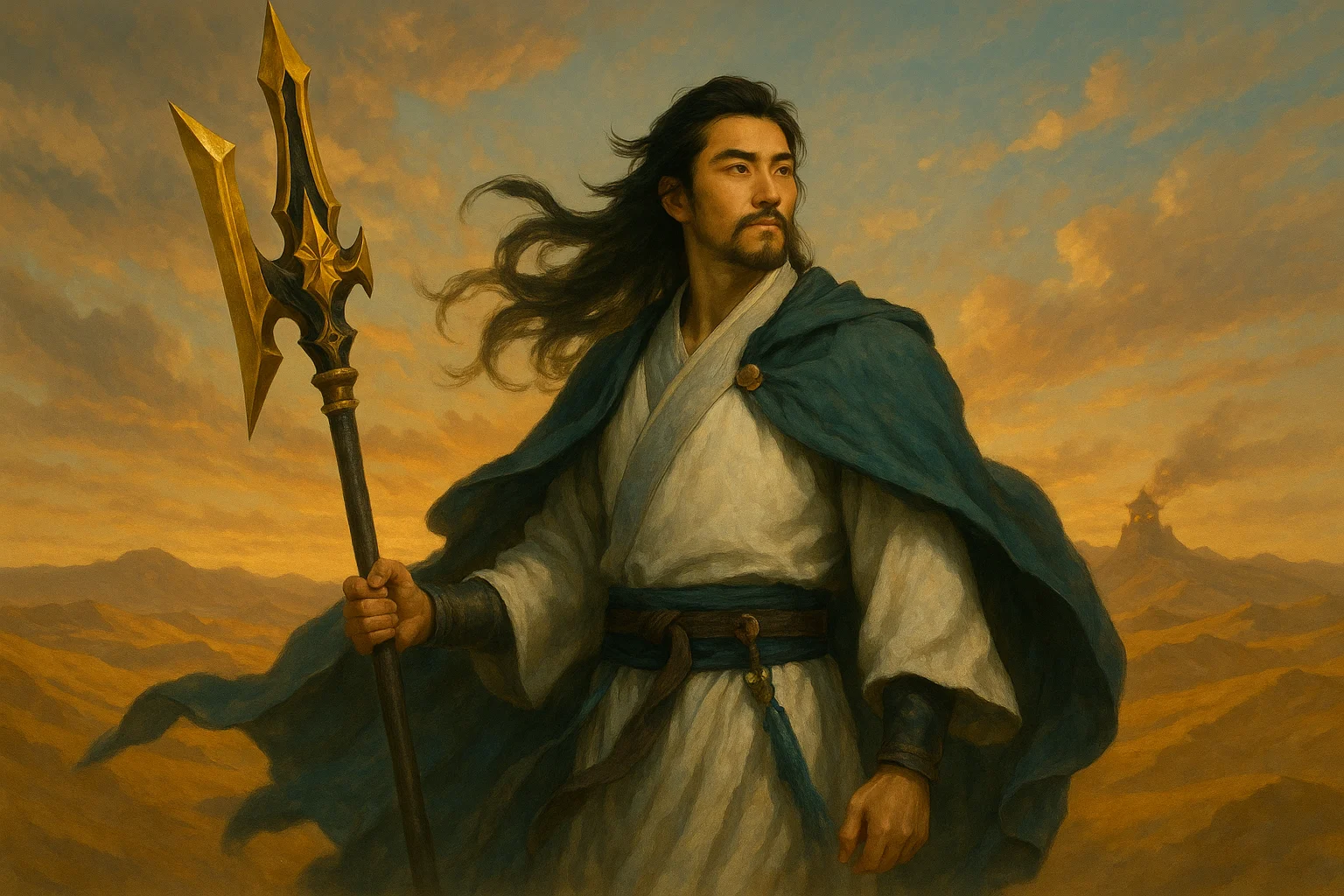
Gao Shi (高适 704 - 765), a native of Jingxian County, Hebei Province, he was a representative poet of the Frontier Fortress School in the High Tang period. In his early years, he lived in poverty and hardship, associating with Li Bai and Du Fu. After the age of fifty, he rose through successive official posts from Prefect of Songzhou to Chief Steward of the Court, and was ennobled as Marquis of Bohai County. Gao Shi excelled in the seven-character ancient verse, with a vigorous and solemn style. He pioneered a new realm of frontier poetry by incorporating a political and military perspective, exerting a profound influence on frontier poetry of the Mid and Late Tang dynasties as well as on patriotic poets like Lu You.