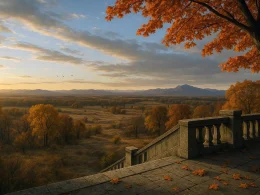



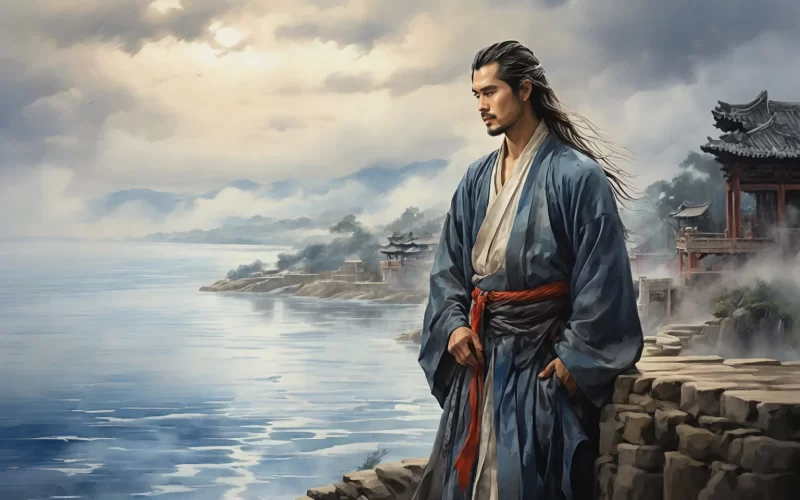
From hundred-foot-high city wall I look afar;
Beyond green willow trees the sandy islets are.
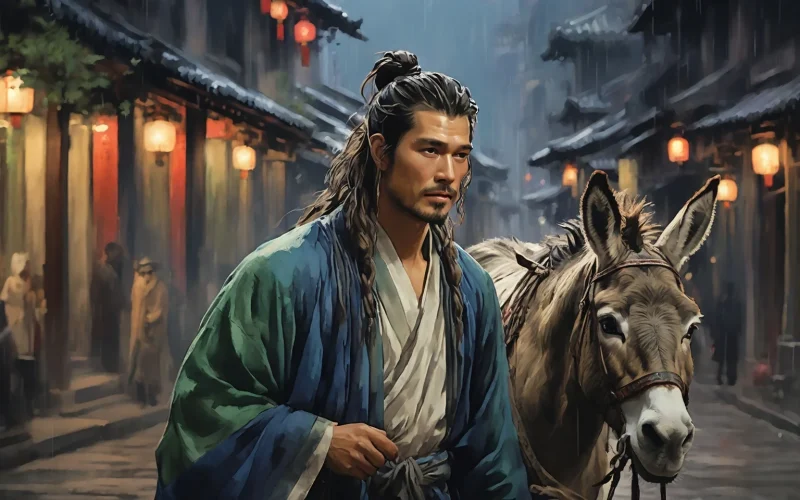
I remember a scholar while young shed vain tears,
And a famed scholar roamed in the spring of his years.

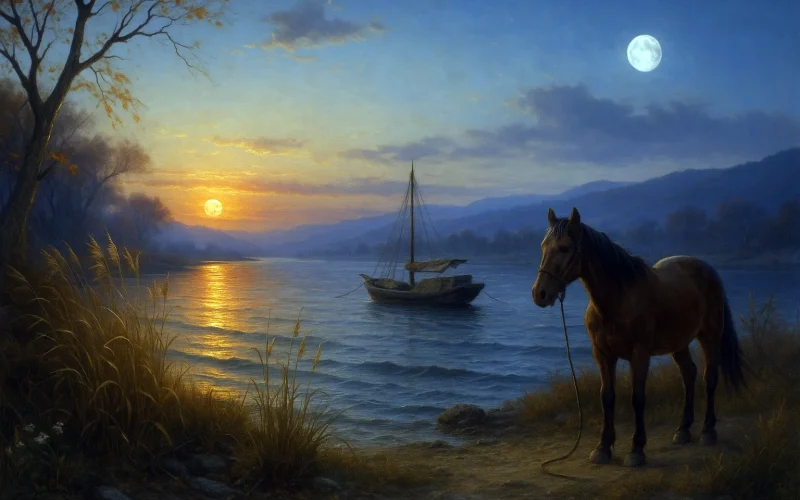
I can't forget white-haired General on the lake floating,
After changing the face of the world he went boating.
An owl might feed on dead rats with good appetite,
But a phoenix would perch on trees of lofty height.
Original Poem
「安定城楼」
李商隐
迢递高城百尺楼,绿杨枝外尽汀洲。
贾生年少虚垂泪,王粲春来更远游。
永忆江湖归白发,欲回天地入扁舟。
不知腐鼠成滋味,猜意鹓雏竟未休。
Interpretation
This poem was written in the spring of 838 AD, a crucial turning point in Li Shangyin's life. Having passed the highest level of the imperial examination the previous year, the poet seemed poised for a successful official career. However, his marriage choice plunged him into the notorious "Niu-Li factional strife" of the Tang Dynasty. Li Shangyin had been a protégé of Linghu Chu, a leader of the Niu faction, but later married the daughter of Wang Maoyuan, who was aligned with the Li faction. This was viewed by the Niu faction as a betrayal. Subsequently, during the special "Erudite and Eloquent Scholar" examination held by the Ministry of Personnel, he was initially accepted but then mysteriously removed from the list with the sole, dismissive comment: "This man is unworthy." This blow not only meant the sudden obstruction of his official path but also gave the twenty-six-year-old poet a profound taste of the cruelty of political struggle and the vulnerability of personal fate.
Following this failure, Li Shangyin returned to the headquarters of Wang Maoyuan, the military governor of Jingyuan (modern Jingchuan, Gansu), where the Anding City Tower became the site for his reflections. Jingyuan, located on the northwestern frontier of the Tang empire, was far removed from the political center of Chang'an. This geographic marginalization mirrored his political marginalization. As he climbed the tower, the vast spring landscape along the Jing River stood in stark contrast to the turmoil in his heart, compelling him to view his personal plight through the lens of history and the tradition of scholar-officials. The result is this masterful regulated verse, fusing personal experience, historical contemplation, and a declaration of self. The poem records not only a young man's setback but also prefigures Li Shangyin's lifelong destiny, marked by the immense tension between personal ideals and political reality.
First Couplet: 迢递高城百尺楼,绿杨枝外尽汀洲。
Tiáo dì gāo chéng bǎi chǐ lóu, lǜ yáng zhī wài jìn tīng zhōu.
From the high city wall, the tower rises sheer;
Beyond the willow boughs, sandbars stretch far and clear.
Explication: The couplet opens with a grand vista, its spatial composition implying a state of mind. The towering wall and lofty tower establish an elevated vantage point transcending the mundane. Though physically on the remote northwestern frontier, the poet's "overlooking" gaze commands the panorama, suggesting a spirit that refuses defeat despite marginalization. The view "beyond the willow boughs" is vividly pictorial; the tender willows in the foreground contrast with the hazy distance of the sandbars. The word "stretch" pushes the gaze toward infinity, as if the poet seeks to see beyond geographical space into the fog of his own fate. The brightness of the spring scene and the poet's inner disappointment form a subtle emotional contrast, establishing the poem's complex tone of grandeur infused with melancholy.
Second Couplet: 贾生年少虚垂泪,王粲春来更远游。
Jiǎ shēng nián shào xū chuí lèi, Wáng Càn chūn lái gèng yuǎn yóu.
Jia Yi, in his youth, shed tears—all in vain;
In spring, Wang Can roamed farther still, his grief his gain.
Explication: Here, the poet employs dual allusions to describe his own situation, shifting from scene to sentiment. The choice of Jia Yi (贾谊) is deeply significant: the talented young Western Han statesman presented his "Memorial on State Affairs" but was slandered and demoted; his "tears" were for the nation, not personal loss. Li Shangyin implies his own failure similarly stemmed from doubted loyalty and envied talent. The allusion to Wang Can (王粲), who sought refuge in Jingzhou during turmoil and wrote "Rhapsody on Climbing a Tower," precisely mirrors the poet's present circumstance—serving in a provincial headquarters and ascending a tower in spring. The words "in vain" and "farther still" are key: "tears… in vain" conveys the futility and disillusionment of his efforts, while "roamed farther still" emphasizes, through comparison, the continuation and deepening of his displacement. Placing these allusions side by side elevates a personal plight to the level of a historical archetype of hardship, granting the poet's pain a timeless resonance.
Third Couplet: 永忆江湖归白发,欲回天地入扁舟。
Yǒng yì jiāng hú guī bái fà, yù huí tiān dì rù piān zhōu.
Ever longing for lakes and rivers, to retire white-haired in the end;
But first, to set the world aright, then sail away in a boat, my friend.
Explication: This couplet forms the poem's spiritual core and visionary climax. Through the parallel structure, the poet presents a keenly self-aware vision for his life. The longing to "retire to lakes and rivers" in old age represents the classic Confucian-Daoist ideal of withdrawal after fulfilling one's duties. Li Shangyin’s unique perspective lies in explicitly placing this personal aspiration after the monumental task of "setting the world aright." This is not merely a sequence of events, but a declaration of values: personal fulfillment is inherently linked to social responsibility. "Setting the world aright" embodies the Confucian ideal of ordering society, while "sailing away in a boat" alludes to the seclusion of Fan Li, evoking Daoist transcendence. This unity of apparent opposites reflects the Tang scholar-official’s ideal of harmonizing civic duty and personal freedom, revealing the poet’s unwavering lofty aspirations despite his adversity.
Final Couplet: 不知腐鼠成滋味,猜意鹓雏竟未休。
Bù zhī fǔ shǔ chéng zī wèi, cāi yì yuān chú jìng wèi xiū.
They know not carrion rats are vile, yet deem them fine to eat;
The noble phoenix they suspect, with envy none can beat.
Explication: The poem concludes with an allegory from the Zhuangzi ("Autumn Floods"), shifting from personal expression to satirical critique and achieving a final leap in spiritual perspective. The "carrion rats" symbolize the objects of vulgar pursuit, like power and position. With sarcastic tone, the poet exposes the absurdity of such struggles from a loftier plane of value. In stark contrast, the "phoenix" represents an ideal of noble purity and detachment. Using it as a self-metaphor, the poet asserts that his aims transcend petty success and, more importantly, demonstrates spiritual superiority over a vulgar world. The phrase "they suspect, with envy none can beat" blends disdain with inevitability, and indignation with integrity, transforming earlier melancholy into utter contempt. The brilliance lies in the poet capturing the Zhuangzian essence of value relativity and spiritual autonomy, granting the poem a philosophical dimension beyond mere political allegory.
Holistic Appreciation
This is a scholar's declaration that achieves spiritual elevation through physical ascent. The poem traces Li Shangyin's construction of an inner world in adversity: from the physical height of the climb, to the historical depth of allusive dialogue, to the aspirational dimension of "setting the world aright" before retirement, culminating in the axiological height of the phoenix-rat dichotomy. The poet's profundity lies in transforming a career setback into a spiritual quest. The "tower" is not just a location but the establishment of a spiritual coordinate. The unified tension between "setting the world aright" and "retiring to lakes and rivers" reveals the scholar-official's highest ideal: balancing worldly commitment and spiritual transcendence. The final allegory completes a transvaluation: the "carrion rats" of worldly contention are definitively placed beneath the "phoenix" of spiritual pursuit.
The poem transcends personal lament, becoming a paradigm for the scholar facing adversity. True stability lies not within city walls but in the affirmation of one's values; true transcendence is not escape but redefining success from a higher vantage point. The "city tower" Li Shangyin built in his youth offers a spiritual vantage point for all later idealists thwarted by reality.
Artistic Merits
- Symbolic Spatial Construction
Spatial imagery carries potent symbolism. The "high tower" signifies spiritual elevation; the "sandbars" stretching into the distance symbolize the breadth of vision the poet seeks. "Lakes and rivers" and "the world" form complementary spatial concepts representing retreat and engagement. Together, they build a multi-dimensional, tension-filled symbolic network. - Layered and Transformative Allusions
Li Shangyin's allusive art reaches maturity here. He draws upon historical figures (Jia Yi, Wang Can) and literary allusions (Fan Li, Zhuangzi), engaging in a dialogue across time that revitalizes them. Jia Yi's "vain tears" and Wang Can's "farther roam" interpret the present through the lens of the past. The fable from the Zhuangzi transforms philosophical allegory into a firm moral stance. This creative use of allusion opens the poem to rich and layered interpretations. - Intellectual Tension within Parallel Structure
The formal demands of parallelism in the regulated verse are exploited for intellectual depth. The parallel between "Jia Yi" and "Wang Can" juxtaposes two archetypes of scholarly frustration. The parallel between "Ever longing" and "first, to," and between "lakes and rivers" and "the world," encapsulates the core tension between withdrawal and engagement. This fusion of strict form and profound content showcases Li Shangyin's mastery. - Multi-textured Diction
The poem's language possesses varied textures: the grandeur of "high city wall," the elegance of "willow boughs"; the melancholy of "vain tears," the sarcasm of "vile fare"; the boldness of "set the world aright," the grace of "sail away." This stylistic range mirrors the poet's complex inner world, demonstrating the remarkable versatility of his poetic language.
Insights
The poem demonstrates a complete path of spiritual ascent through adversity. True growth begins by contextualizing personal hardship within a broader historical narrative, gaining perspective beyond the immediate. The sequence—"first, to set the world aright, then sail away"—reveals the profound unity of commitment and freedom: the highest personal fulfillment is grounded in social concern, while genuine social action requires spiritual independence. The phoenix-rat dichotomy addresses a timeless question: spiritual stature is defined as much by what one rejects as by what one pursues. Discerning the nature of "carrion rats" and maintaining distance is essential for integrity in a contentious world.
Ultimately, the poem prompts reflection on the true meaning of "stability"—not physical security, but an inner foothold established through spiritual clarity in a world of confusion. Li Shangyin's figure upon the tower suggests that each of us must build our own "Anding City Tower" within, a place from which to survey history, envision ideals, and withstand the clamor of vulgar strife.
Poem translator
Xu Yuanchong (许渊冲)
About the poet
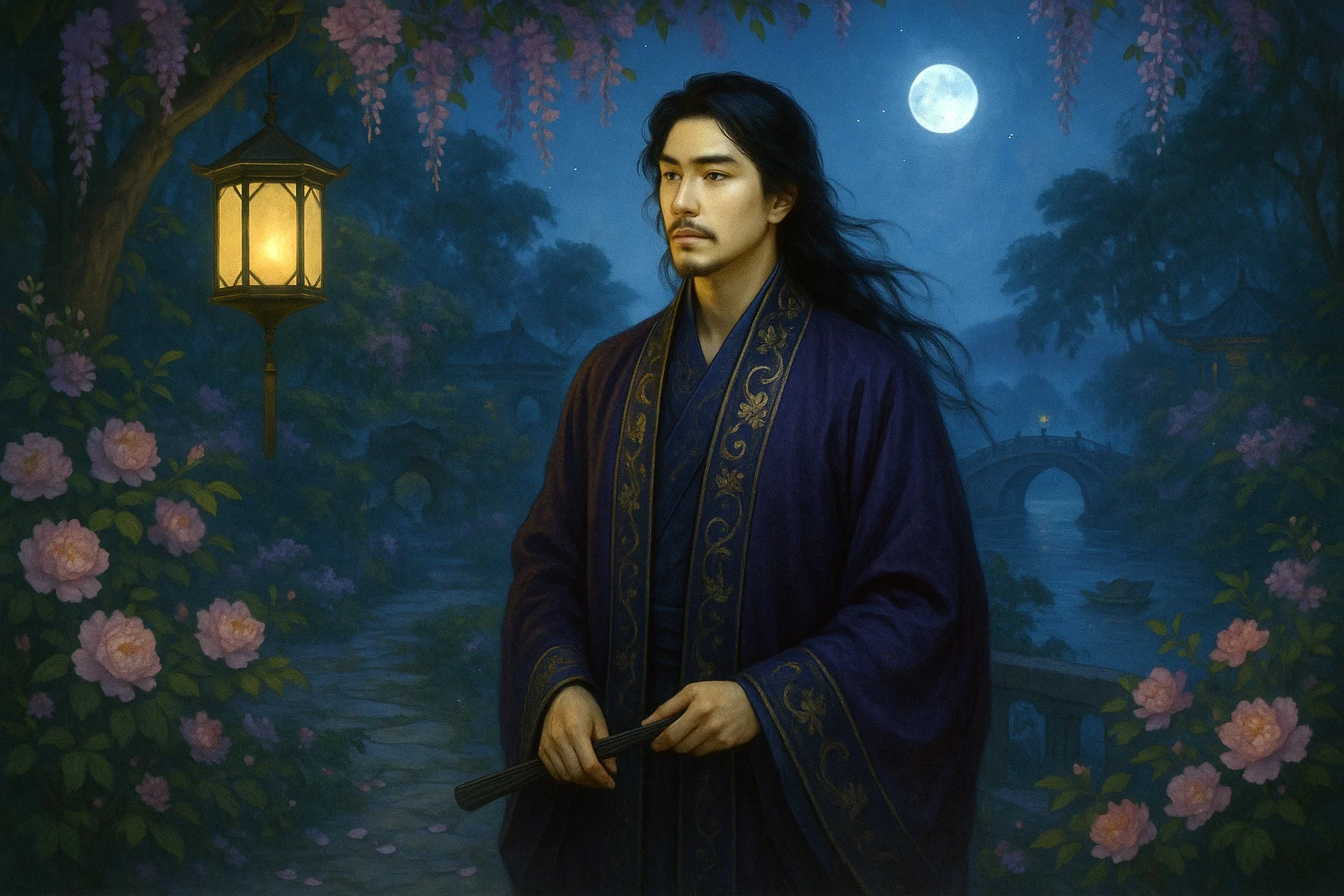
Li Shangyin (李商隐), 813 - 858 AD, was a great poet of the late Tang Dynasty. His poems were on a par with those of Du Mu, and he was known as "Little Li Du". Li Shangyin was a native of Qinyang, Jiaozuo City, Henan Province. When he was a teenager, he lost his father at the age of nine, and was called "Zheshui East and West, half a century of wandering".