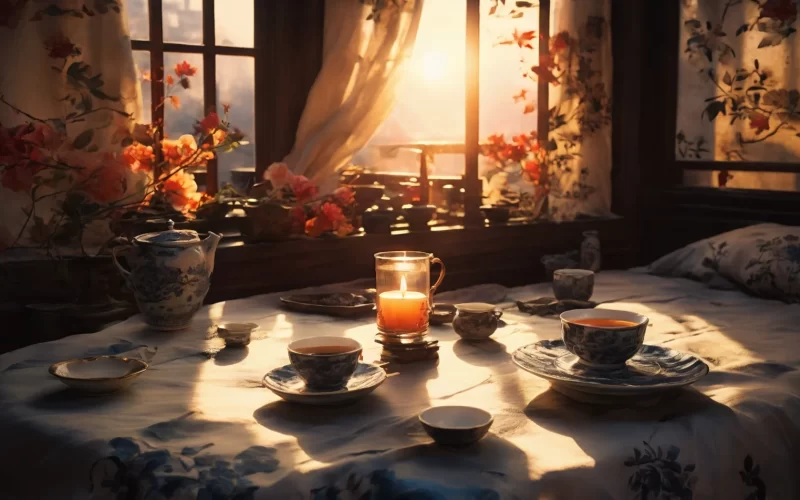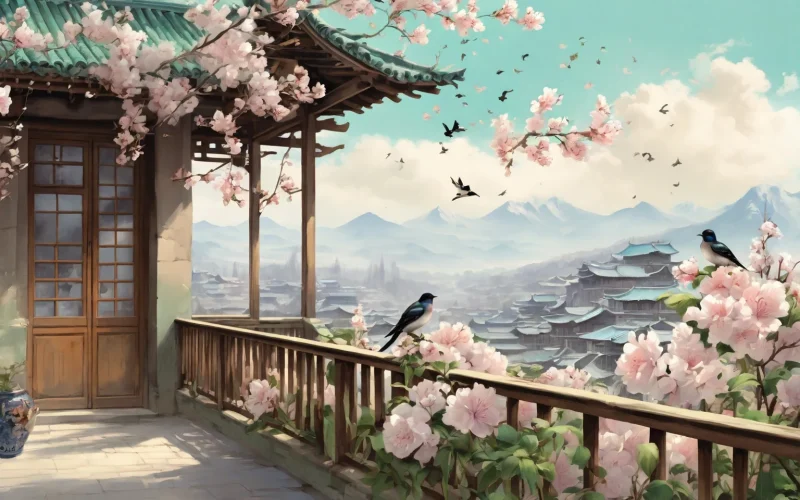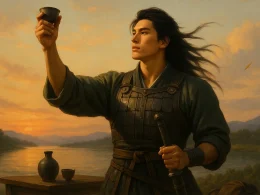

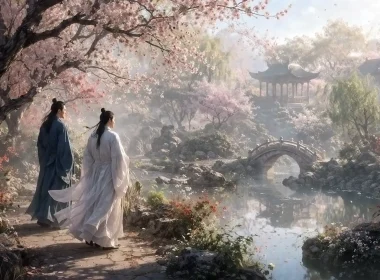
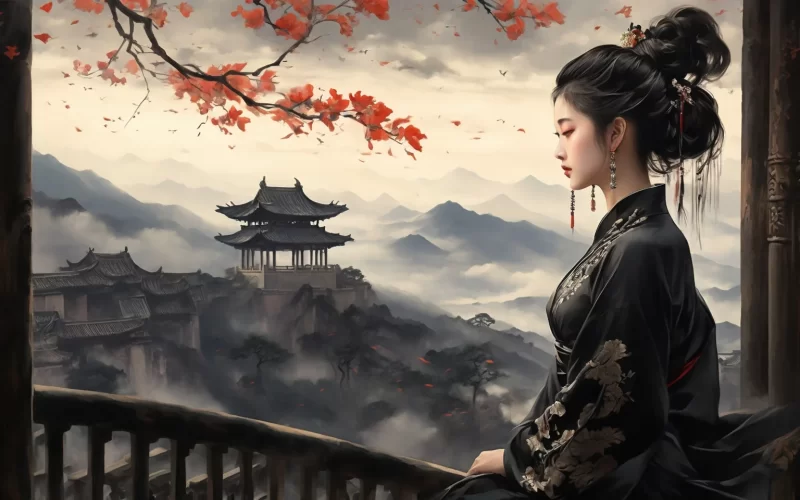
The cypress and the pine, on the North Mang’s quiet steep,
Are prisoned in a vapour, a melancholy deep;
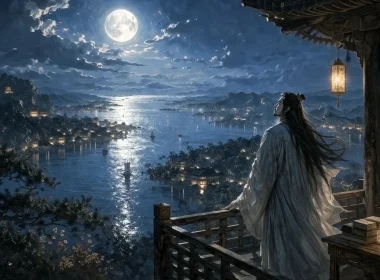
And in the Swallow Tower, Thought sits with folded wings,
A quiet thing, a mute and unremembering thing.

Since they laid down the sword, the shoe, beneath the clod,
And song was but a scatter’d dust along the sod;
Since the faint perfume from the crimson sleeve did part —
Ten years have lain upon my life, and on my heart.
Original Poem
「燕子楼 · 其二」
张仲素
北邙松柏锁愁烟,燕子楼中思悄然。
自埋剑履歌尘散,红袖香销已十年。
Interpretation
"The Swallow Tower" is a set of three famous poems by the Mid-Tang poet Zhang Zhongsuh; this is the second. Swallow Tower was located in Xuzhou, built by the renowned Tang general Zhang Yin for his beloved concubine, Guan Panpan. After Zhang Yin's death, Panpan, cherishing their old love, did not remarry. She lived alone in this tower for over a decade, ultimately starving herself to death, leaving behind a poignant and moving love story. This poem is the second in the set, and its theme is "remembrance and longing." The first poem described her morning after a sleepless night, using "The lonely sleeper rises from the lovebird bed" to write the pain of objects remaining but people changed. This poem, however, turns its brushstrokes toward the ten years of time, weaving imagination and memory together to write the loneliness and fidelity of her ten-year vigil in the tower. The poet writes from Panpan's perspective, imagining the desolation of Zhang Yin's tomb on Northern Mount, then returning to the present moment of "I ponder silently" in Swallow Tower, and finally concluding with "For ten long years my dancing sleeves have lost their sweet perfume," condensing the vicissitudes of ten years of vigil into seven characters. This poem writes of her remembrance of the deceased, and also her mourning for her own ten years of youth.
In classical poetry, many elegies directly express grief, and many tributes to fidelity praise its steadfastness. Zhang Zhongsuh's poem, however, is uniquely conceived, using a technique of blending the real and the imaginary to write Panpan's remembrance with subtlety and depth. The "pines and cypresses are locked in mist gray" on Northern Mount is the imagined graveyard; the "I ponder silently in Swallow Tower" is the reality of sitting solitary. Between the imaginary and the real, the sorrow of separation by life and death already pervades. And the couplet "Since you were buried, your glory is lost and song and dance done; / For ten long years my dancing sleeves have lost their sweet perfume" uses "glory" (lit. sword and footwear) to allude to the deceased's past honor, "song and dance" (lit. song's dust) to subtly signify the liveliness and splendor of the past performances, and "dancing sleeves have lost their sweet perfume" to metaphorize the fading of youth and beauty—ten years of vigil in the tower, the dancing sleeves of those days have long since lost their fragrance, the song's dust of those days has long since dispersed, only the unchanging longing, like the pines and cypresses on Northern Mount, remains evergreen year after year.
First Couplet: "北邙松柏锁愁烟,燕子楼中思悄然。"
Běi máng sōng bǎi suǒ chóu yān, yànzi lóu zhōng sī qiǎo rán.
On Northern Mount pines and cypresses are locked in mist gray; I ponder silently in Swallow Tower all the day.
The poem opens with the technique of blending the real and imaginary, writing Panpan's longing with penetrating depth. "北邙松柏锁愁烟" (On Northern Mount pines and cypresses are locked in mist gray) describes her imagined graveyard—Northern Mount is Zhang Yin's burial place. "Pines and cypresses" often symbolize sorrowful remembrance. The three words "锁愁烟" (locked in sorrowful mist) use "锁" (locked) to describe the thickness of the mist and also the weight of sorrow, as if the graveyard is also enveloped in grief. The next line, "燕子楼中思悄然" (I ponder silently in Swallow Tower all the day), shifts from the imaginary to the real, from there to here—she sits in silent longing in the tower. The three words "思悄然" (ponder silently) use quiet to express sorrow, the feelings heavy, hesitant to speak. Within this couplet, the real and imaginary intertwine, writing the distance between the living and the dead, the interweaving of reality and imagination, with subtlety and profound grace.
Second Couplet: "自埋剑履歌尘散,红袖香销已十年。"
Zì mái jiàn lǚ gē chén sàn, hóng xiù xiāng xiāo yǐ shí nián.
Since you were buried, your glory is lost and song and dance done; For ten long years my dancing sleeves have lost their sweet perfume.
This couplet is the soul of the entire poem, shifting from present longing to a ten-year recollection. "自埋剑履歌尘散" (Since you were buried, your glory is lost and song and dance done) writes of the changes after Zhang Yin's burial—"剑履" (lit. sword and footwear) alludes to the honor of his former status, "歌尘" (lit. song's dust) subtly signifies the past liveliness and elegance of music and dance in the tower. Now all of this is gone; the word "散" (lost/done/dispersed) writes the desolation of faded splendor utterly. The next line, "红袖香销已十年" (For ten long years my dancing sleeves have lost their sweet perfume), writes of Panpan's own vicissitudes of ten years of vigil. "红袖香销" (dancing sleeves have lost their sweet perfume) refers both to the end of her singing and dancing life and metaphorizes the quiet fading of her youth and beauty over the years. The three words "已十年" (already ten years) state the weight of a decade in an extremely subdued tone. This couplet contains restrained yet deep and sincere emotion, gathering within it Panpan's loyalty to the deceased, her mourning for her youth, and her reflections on time.
Holistic Appreciation
This is the second poem in Zhang Zhongsuh's set. The entire poem consists of four lines and twenty-eight characters. Using a technique of interweaving imagination and memory, it blends Panpan's longing for the deceased, the loneliness of ten years of vigil, and the lament for fading youth, showcasing her unchanging, faithful affection over ten years like a single day.
Structurally, the poem presents a layering of blending the real and imaginary, and a mingling of time and space. The first couplet begins with the imagined scene of "pines and cypresses" on Northern Mount, followed by the real scene of "in Swallow Tower". One imaginary, one real; the sorrow of separation by life and death already pervades. The second couplet uses "Since you were buried" to look back to the start of the ten years and concludes with "already ten years" to mark the end of the decade, condensing the vicissitudes of ten years into ten characters. Between the four lines, it moves from imaginary to real, from there to here, from now to then, progressing layer by layer, forming a seamless whole.
Thematically, the core of this poem lies in the three words "已十年" (already ten years). That line, "For ten long years my dancing sleeves have lost their sweet perfume," is Panpan's lament for her own ten years of youth, and also her proof of unchanging loyalty to the deceased over ten years. This plain statement of "already ten years" is more powerful than any loud wailing of grief—because true deep feeling is not momentary weeping, but ten years of silent waiting like a single day; true fidelity is not a verbal vow, but silence in the depths of time.
Artistically, the poem's most moving aspect lies in the subtle technique of "blending the real and imaginary, using quiet to write sorrow." The poet does not write how Panpan weeps, nor how she suffers. He writes only of her imagined graveyard, her solitary sitting in reality, her ten years in memory. The pines and cypresses "locked in... mist gray," the silent "ponder silently," the "dancing sleeves" that have "lost their sweet perfume," the time that is "already ten years"—every image is an externalization of her inner feelings; every description accumulates deep power in silence.
Artistic Merits
- Blending Real and Imaginary, Dual Artistic Conception: Juxtaposing the imagined scene of "pines and cypresses" on Northern Mount with the real scene of "in Swallow Tower." The imaginary contains the real, the real contains the imaginary; the artistic conception is far-reaching.
- Restrained Emotion, Sorrowful but Not Devastating: It does not elaborate on weeping, does not directly describe pain, but instead conveys feeling through subtle strokes like "ponder silently" and "lost their sweet perfume." The emotion is deeper, the power stronger.
- Subtle Allusion, Rich Symbolism: "剑履" (sword and footwear) symbolizes the man's honor in life, "歌尘" (song's dust) subtly signifies the splendor of music and dance, "红袖香销" (dancing sleeves have lost their sweet perfume) refers to the fading of youth. The implied meaning is profound, thought-provoking.
- Using Time to Write Feeling, Using Silence to Write Depth: The three words "已十年" (already ten years) write the full weight of time; the three words "思悄然" (ponder silently) write the full depth of the heart. The words are plain, yet each word strikes the heart.
Insights
This second poem, through the voice of Guan Panpan, speaks to an eternal theme—True deep feeling is not momentary weeping, but ten years of silent waiting like a single day; true fidelity is not a verbal vow, but silence in the depths of time.
First, it lets us see "the power of time." "For ten long years my dancing sleeves have lost their sweet perfume"—ten years is enough for dancing sleeves to fade, for youth to vanish, for song's dust to disperse. Yet what remains unchanged is the deep affection of "I ponder silently" in Swallow Tower. It tells us: Time can take away youth, beauty, and splendor, but it cannot take away a devoted heart.
On a deeper level, this poem makes us contemplate "the weight of memory." The imagination of "pines and cypresses" on Northern Mount is Panpan's remembrance of the deceased; the recollection of "Since you were buried" is her longing for the past. She does not drown in sorrow, but converses with the deceased in memory, keeps company with the past in remembrance. It makes us understand: Memory is not weakness, but the only connection to the beloved; remembrance is not futile, but the deepest affirmation of all that was once possessed.
And what is most moving is the poem's restraint of "sorrowful but not resentful." The poet does not write of Panpan's tears, nor her cries. He writes only of her silent "ponder silently," only of her calm "dancing sleeves have lost their sweet perfume." This restraint is the inwardness of deep feeling reaching its peak, and also the peace of fidelity reaching its depths. True fidelity is not an impassioned, tearful accusation, but, in the passage of time, still silently guarding that original love.**
This poem is set in the Mid-Tang Swallow Tower, yet it allows everyone who has waited in the depths of time, who remembers in recollection, to find resonance within it. The desolation of "pines and cypresses are locked in mist gray" is the scenery in the heart of every long-er. The silence of "in Swallow Tower" is the daily posture of every solitary watcher. The calm of "dancing sleeves have lost their sweet perfume" is the deepest sigh of everyone growing old in time. The soft sigh of "already ten years" is the shared sigh of everyone who has experienced time. This is the vitality of poetry: it writes of Guan Panpan's story, but one reads of people in all eras who, in the depths of time, are still deeply affectionate.
About the poet
Zhang Zhongsu (张仲素 c. 769 - c. 819), a native of Hejian City, Hebei Province, was a renowned poet of the Mid-Tang period. He passed the jinshi examination in the fourteenth year of the Zhenyuan era (798 AD) and also succeeded in the Boxue Hongci (Erudite Scholar) examination. He held official positions including Hanlin Academician and Drafter of the Central Secretariat. His poetry excelled in the yuefu (Music Bureau) style, particularly in depicting the sentiments of women longing for their absent husbands. His poetic style is characterized by a delicate, refreshing clarity combined with a touch of heroic vigor. Together with Linghu Chu and Wang Ya, both also Drafter of the Central Secretariat, he engaged in poetic exchanges, forming a triumvirate that stood alongside Bai Juyi’s popular school and Han Yu’s unconventional school in the literary landscape of the time.