
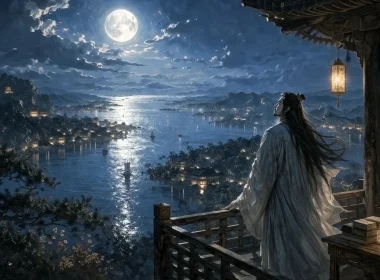
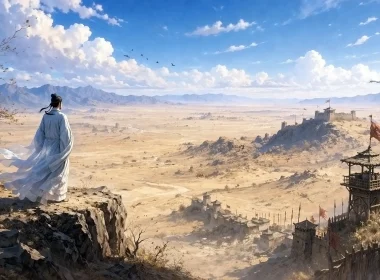
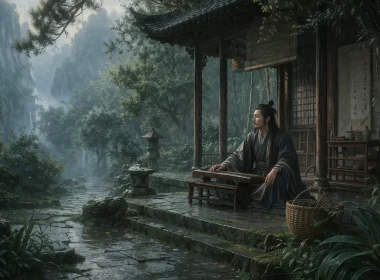
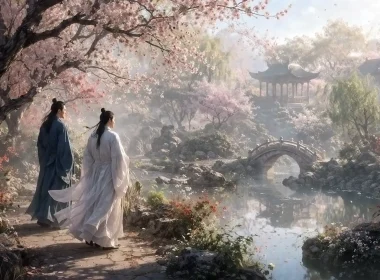
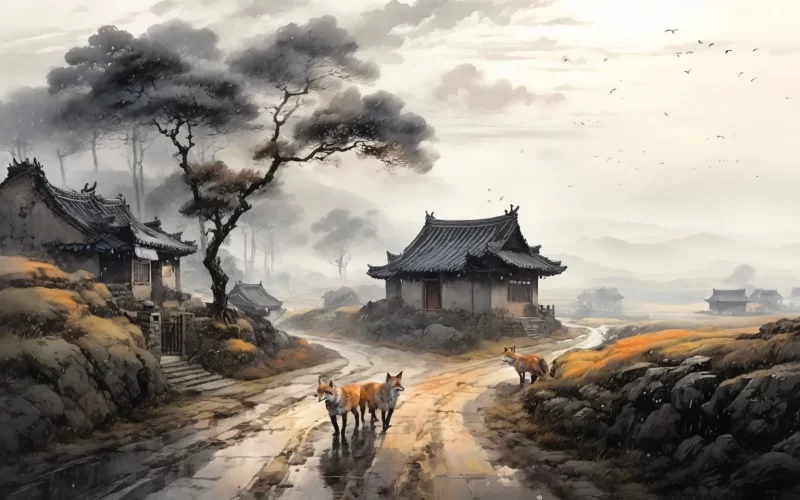
After rebellion my hometown looks lonely;
Only brambles run riot in courtyard and lane.
A hundred households lived here together;
In war they’re scattered east and west like rain.
The living have gone without leaving traces;
The dead are turned to dust, mixed with mud in vain.
A straggler from a beaten army, I come back,
Groping for the road where I used to go.

I trudge long to find but a deserted town,
I see the sun looks sad, feeling dreary and low.
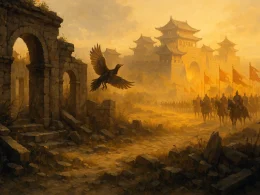
I meet but foxes which bristle up in anger
And glare at me, barking in towering rage.
Of my neighbors on four sides one or two
Widows are left to live out their old age.

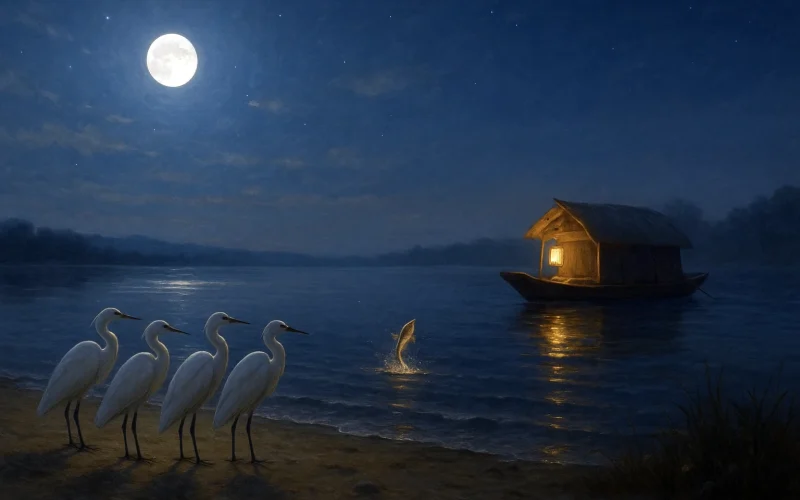
Even a bird loves the branch where it rests.
Poor as it is, I’ll not leave my old nest.
In spring I hoe alone the weed o’ergrown field;
At dusk I water garden without yield.
But county officers know I’ve come back;
They call me up and order me to drill.

Although I’m enlisted in my native state,
When I look back, I’ve no one to leave still.
To go not far, I’m but a lonely soul;
To go far away, I’ll lose all control.
Since my home is completely destroyed,
Far or near, what’s the difference to me?

My heart will ever ache for my sick mother
Who died five years ago in the trench unlucky.
She gave me birth, but I could do nothing for her;
We could only sigh all our life, she and me.

A man who has no home, where should he leave?
How can we live a life common people should live?
Original Poem
「无家别」
杜甫
寂寞天宝后,园庐但蒿藜。
我里百余家,世乱各东西。
存者无消息,死者为尘泥。
贱子因阵败,归来寻旧蹊。
久行见空巷,日瘦气惨凄,
但对狐与狸,竖毛怒我啼。
四邻何所有,一二老寡妻。
宿鸟恋本枝,安辞且穷栖。
方春独荷锄,日暮还灌畦。
县吏知我至,召令习鼓鞞。
虽从本州役,内顾无所携。
近行止一身,远去终转迷。
家乡既荡尽,远近理亦齐。
永痛长病母,五年委沟溪。
生我不得力,终身两酸嘶。
人生无家别,何以为蒸黎。
Interpretation
This work serves as the concluding piece of Du Fu's poetic series "Three Officials and Three Farewells," composed in the spring of 759 CE, the second year of the Qianyuan era under Emperor Suzong. At that time, the Tang imperial forces, comprising nine military governors, suffered a catastrophic defeat at Yecheng. With the situation perilous, the court implemented a ruthless, near-exhaustive conscription drive in the region between Luoyang and Tong Pass to replenish its troops. Returning to his official post in Huazhou from Luoyang, Du Fu witnessed firsthand the devastation left by war: desolate fields, a decimated populace, and the brutality of petty officials. Using poetry as history and his own grief as ink, "Leaving Home Again" stands as the chapter with the most universal tragic significance in this "poetic history." The soliloquy of a soldier with "no family to bid farewell to" transcends individual misfortune, becoming the ultimate portrait of the absolute, chilling void experienced when an entire era uproots individual existence.
Section 1: “寂寞天宝后,园庐但蒿藜。我里百余家,世乱各东西。存者无消息,死者为尘泥。贱子因阵败,归来寻旧蹊。久行见空巷,日瘦气惨凄,但对狐与狸,竖毛怒我啼。”
Jì mò Tiānbǎo hòu, yuán lú dàn hāo lí. Wǒ lǐ bǎi yú jiā, shì luàn gè dōng xī. Cún zhě wú xiāo xī, sǐ zhě wéi chén ní. Jiàn zǐ yīn zhèn bài, guī lái xún jiù qī. Jiǔ xíng jiàn kōng xiàng, rì shòu qì cǎn qī, dàn duì hú yǔ lí, shù máo nù wǒ tí.
After the turmoil late in Tianbao's reign, all is desolate; / Homesteads and gardens are but weeds, a grim and barren state. / My village once held over a hundred households, every one; / Now, scattered by the world's disorder, east and west they're run. / Of those still living, not a word; the dead are dust and clay. / A lowly wretch, routed in battle, I've come back this way, / Seeking the old, familiar paths I used to know. / Long I walk through empty lanes; the sun looks gaunt, its light seems low; / The very air is bleak and chill. I face but fox and wildcat here, / Their fur on end, who snarl and yowl at me in rage and fear.
The opening establishes the tone with sweeping historical narrative. The five words "After the turmoil late in Tianbao's reign" anchor personal suffering to the coordinates of an era's cataclysm. "Homesteads and gardens are but weeds"—the word "but" conveys the utter desolation of civilization's traces being overrun by raw, natural force. With a historian's brush, the poet outlines a standard portrait of a chaotic age: a hundred households scattered, the living and the dead severed. When the protagonist—the "lowly wretch" (a routed soldier)—treads the "old, familiar paths," he enters a disordered world ruled by inhuman forces. "The sun looks gaunt, the very air is bleak and chill" uses synesthesia to imbue nature with a decaying persona; even daylight seems impoverished and feeble before this human devastation. Most startling is "I face but fox and wildcat here, / Their fur on end, who snarl and yowl at me in rage and fear." The former master of the home is now seen as an intruder by wild beasts. That they "snarl and yowl" and have "fur on end" is not merely realism but a symbolic declaration of the natural law of the jungle reasserting dominance after the complete collapse of civilized order.
Section 2: “四邻何所有?一二老寡妻。宿鸟恋本枝,安辞且穷栖。方春独荷锄,日暮还灌畦。”
Sì lín hé suǒ yǒu? Yī èr lǎo guǎ qī. Sù niǎo liàn běn zhī, ān cí qiě qióng qī. Fāng chūn dú hè chú, rì mù huán guàn qí.
What's left of all my neighbors now? A widow or two, old and gray. / The roosting bird still loves its former bough; how could I go away? / I'll dwell here in this bitter need, and put up with my lot. / Now spring is here, alone I shoulder up my hoe and toil; / At day's end, I return to tend and water my scant soil.
Within absolute desolation, the appearance of "A widow or two, old and gray" offers no solace; rather, their extreme remnant state confirms the totality of destruction. They are the final witnesses to the catastrophe and the ruins themselves. The protagonist metaphors himself as the "roosting bird [that] still loves its former bough," speaking of a near-instinctual emotional bond and survival tenacity. Thus, in the springtime of growth, he "alone shoulder[s] up my hoe" and "return[s] to tend and water my scant soil." The word "alone" pervades this futile endeavor—there is no help from neighbors, no familial expectation. His labor is an attempt to rebuild meaning from the void, a lonely, existential ritual of repair performed on civilization's graveyard. This faint productive activity is humanity's last, most humble resistance against disorder and extinction in extremity.
Section 3: “县吏知我至,召令习鼓鞞。虽从本州役,内顾无所携。近行止一身,远去终转迷。家乡既荡尽,远近理亦齐。”
Xiàn lì zhī wǒ zhì, zhào lìng xí gǔ pí. Suī cóng běn zhōu yì, nèi gù wú suǒ xié. Jìn xíng zhǐ yī shēn, yuǎn qù zhōng zhuǎn mí. Jiā xiāng jì dàng jìn, yuǎn jìn lǐ yì qí.
The county clerk, who knew I had come back, / Summoned me to learn the drum, to take up the soldier's pack. / Though I serve in my own district, on duties close at hand, / I look within—no one to bid farewell, no goods at my command. / To go nearby, I am a single, solitary frame; / To go far off, I'd lose my way in the end, all the same. / Since my homeland is now completely swept away and gone, / What difference, in reason, between "far" and "drawn"?
The cold machinery of power never forgets its claim on the individual. The word "knew" in "The county clerk, who knew I had come back" precisely captures the system's omnipresent surveillance and seizure. More ironic is that this time it is for "service in my own district." Yet, "I look within—no one to bid farewell, no goods at my command"—this calm statement is more devastating than any wail. It signifies the double zeroing of social bonds (kin) and material foundation (possessions). From this, the poem deduces that earth-shattering logical conclusion: "Since my homeland is now completely swept away and gone, / What difference, in reason, between 'far' and 'drawn'?" When "home" as both physical space and emotional tether is utterly erased, spatial distance loses all meaning. All life's choices collapse into an absolute, cold void. This is not acceptance but the complete failure of value judgment after the foundation of existence has been pulled away.
Section 4: “永痛长病母,五年委沟溪。生我不得力,终身两酸嘶。人生无家别,何以为蒸黎。”
Yǒng tòng cháng bìng mǔ, wǔ nián wěi gōu xī. Shēng wǒ bù dé lì, zhōng shēn liǎng suān sī. Rén shēng wú jiā bié, hé yǐ wéi zhēng lí.
A grief that will not end: my mother, long in illness bound, / For five years now has lain in ditch and stream, without a mound. / She gave me life, yet from my strength no comfort could she reap; / Through all our days, a shared and sour lament we'll ever keep. / In life, to have no family left for parting's bitter cost— / How can a man like this be called a subject, and not lost?
Within existential void, the only certainty is the gnawing pain of ethical betrayal. "My mother, long in illness bound, / For five years now has lain in ditch and stream"—the horror of a mother dying ill and left unburied in a ravine is the ultimate manifestation of war's destruction of human bonds. "She gave me life, yet from my strength no comfort could she reap; / Through all our days, a shared and sour lament we'll ever keep" expresses not only the eternal guilt of a child unable to care for a parent but also the utter powerlessness of the individual beneath the era's crushing wheel. Ultimately, all suffering coalesces into that soul-shaking final question: "In life, to have no family left for parting's bitter cost— / How can a man like this be called a subject, and not lost?" If a person is stripped of even the right and the object of a familial farewell, where lies his identity as a "subject," the entire social and ethical foundation for his existence in the world? This question is the ultimate indictment of the war machine and a profound philosophical lament on "what it means to be human."
Holistic Appreciation
This work represents the pinnacle of Du Fu's narrative art. Its power lies in accomplishing a philosophical elevation from "concrete suffering" to "universal predicament." The entire poem employs a first-person soliloquy, its structure like a meticulously constructed four-act tragedy: The Absolute Desolation of Home (destruction of physical foundation) → The Individual's Futile Repair (instinctual struggle for meaning) → The State's Renewed Conscription and Existential Void (nullification of social relations) → Eternal Ethical Agony and the Ultimate Question of Identity (collapse of spiritual foundation). It reveals a condition more terrible than death: to be alive, yet stripped of all attributes that make one a social, ethical being, plunged into the absolute solitude and void of having "no family to bid farewell to." Du Fu not only recorded the scars of war but profoundly exposed how war systematically destroys the complete world that makes a person human.
Artistic Merits
- The Profound Concentration of "Poetic History" Technique: Using an individual's experience as a representative case, the poem provides a powerful, condensed depiction of the typical scene of "ten thousand households emptied" in the northern countryside after the An Lushan Rebellion. The numerical contrast between "over a hundred households" and "A widow or two" and the imagistic shift from "Homesteads and gardens" to "weeds" possess a stunning power of historical representation.
- The Implosive Force of First-Person Narrative: The consistent use of the protagonist's soliloquy, eschewing the poet's direct commentary, generates a more powerful emotional impact and intellectual urgency for the reader through the layered revelation of inner feeling and the inexorable logical progression of fate.
- The Symbolic Construction of an Imagistic System: Images like "the sun looks gaunt," "fox and wildcat… snarl and yowl," and "mother… lain in ditch and stream" are not merely atmospheric but form a progressively intensifying symbolic sequence: natural disorder, civilization's retreat, the collapse of human ethics—all pointing to a comprehensively disintegrating world.
- The Philosophical Penetration of Logical Deduction: From "seeking the old, familiar paths" to "no one to bid farewell, no goods at my command," to "What difference… between 'far' and 'drawn'?" and finally to "How can a man like this be called a subject?" the poem reveals a harsh logical chain, advancing the consequences of war step by step from the material level to the ethical and existential levels, possessing a potent speculative quality.
Insights
"Leaving Home Again" reveals a profound theme that transcends its era: When war or disaster not only destroys people's homes and lives but also systematically dismantles their social ties, ethical identity, and spiritual belonging, how is a person to exist? The "lowly wretch" in the poem faces precisely this uprooted, absolute void.
Its lesson for modern civilization is this: True catastrophe lies not only in material loss but in the collapse of the world of meaning. It warns us that any social order must uphold the protection of the basic connections that make us human (family, community, dignity) as its bottom line. When a person has "no family left for parting," he is also stripped of his qualification as a "subject" (the common people). This is not merely personal tragedy but a sign of the entire civilization's failure. Thus, Du Fu's poem stands as a profound admonition for all ages: to protect each concrete, rooted individual and family is to protect human civilization itself.
About the poet

Du Fu (杜甫), 712 - 770 AD, was a great poet of the Tang Dynasty, known as the "Sage of Poetry". Born into a declining bureaucratic family, Du Fu had a rough life, and his turbulent and dislocated life made him keenly aware of the plight of the masses. Therefore, his poems were always closely related to the current affairs, reflecting the social life of that era in a more comprehensive way, with profound thoughts and a broad realm. In his poetic art, he was able to combine many styles, forming a unique style of "profound and thick", and becoming a great realist poet in the history of China.